

The Strong-Smelling Insect Repellent You Should Pack For Your Next Camping Trip

We may receive a commission on purchases made from links.
There are a lot of great things about camping and spending time outdoors. Dealing with a myriad of pesky insects is not one of them. In order to enjoy a more pleasant outdoor experience, many have experimented with a variety of remedies. Some use coffee grounds to keep mosquitoes away from campsites. Others use pine needles to repel mosquitoes or employ vanilla as insect repellent in order to steer clear of a variety of bugs. While each of these methods can be effective, if you want to guarantee a pest-free outing, DEET is the strong-smelling insect repellent you should pack for your next camping trip.
Biting bugs like mosquitoes and ticks are much more than an annoyance. They are also a health risk. Mosquitoes are known to carry deadly diseases such as West Nile virus and malaria. Ticks spread dangerous diseases as well, most notably Lyme disease. With that in mind, packing a DEET-based insect repellent like Repel Sportsman Max, which is 40% DEET, can help eliminate or at least minimize these health risks.
Of course, health is also at the center of a bit of a controversy over DEET. Although health risks related to the use of DEET (N,N-diethyl-meta-toluamide) are often cited as a reason to not use products containing it, scientific evidence backing these claims is spotty. The Environmental Protection Agency maintains using products containing DEET is safe, even for children and women during pregnancy. The caveat is using the product as directed. Additionally, there is some advice cautioning against using with children under 2 years old and if you have sensitive skin or are allergic to DEET. There is no known correlation between DEET and pregnancy issues, and some researchers suggest that the benefits of disease protection while pregnant outweigh any risks. While the CDC does not issue any precautions for using DEET on children, it does advise against using products with oil of lemon eucalyptus or para-menthane-diol on children under 3.
Why DEET is so effective and how to use it properly
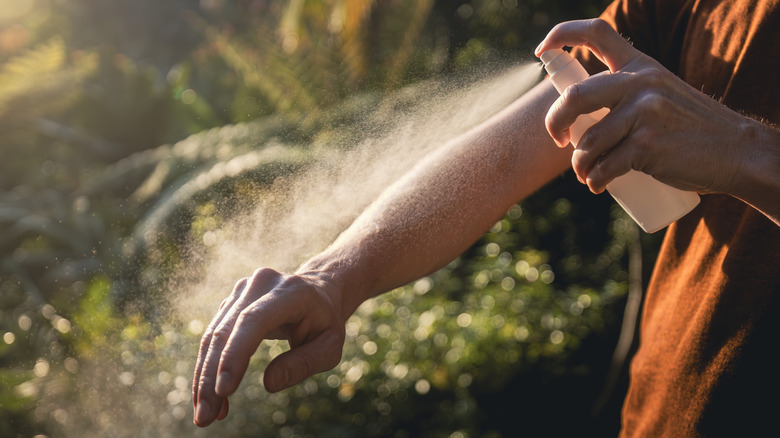
DEET dates back to the late 1940s, when it was developed to help reduce insect-spread disease among soldier fighting in areas with dense concentrations of mosquitoes. It quickly proved to be a very effective repellent. It is, however, a repellent, not an insecticide, meaning it doesn't actually kill bugs. So, expect mosquitos, gnats, and other insects to still be buzzing around. But, they won't actually bite because DEET does something to derail their senses and ability to feed. Although scientists still have not been able to figure out exactly how it does this or what particular senses within the insect it affects, there is an overwhelming consensus that DEET is the most effective of available repellents for the general population.
DEET is actually as simple to use as it is effective. There is literally over 100 different DEET-based repellent products on the market in the United States today. These range from aerosols and mister sprays to lotions and rub-on sticks. The main thing when it comes to safely applying DEET-based products is to follow the instructions. If using a spray, apply on clothing, not under it. Also avoid using the product on any area with an open wound or near your eyes and mouth.
Additionally, do not use more than necessary. DEET is very effective and lasts a long time. So, you do not need to saturate yourself or reapply. You should only reapply if you start being bitten at some point later in the day. Once your outdoor adventure is over, wash all the skin on which DEET was applied with soap and water. All clothing that was treated with DEET should also be washed before wearing again.