

The Bright Red Perennial That'll Have Cardinals Flocking To Your Yard
We may receive a commission on purchases made from links.
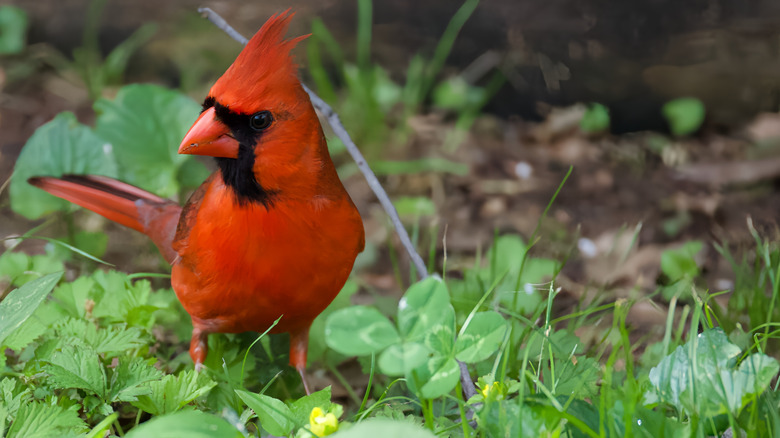
No matter how often they visit your yard, a bright red cardinal almost always inspires an excited, "Oh look! A cardinal!" whenever it appears at the bird feeder or bird bath. Their brilliant coloring and bold personalities make them a favorite of bird watchers everywhere. There are many things you can do to attract cardinals to your yard including adding a great year-round water source, providing plenty of food they like, and planting the flowers that will bring all the cardinals to your yard. One beautiful perennial that will attract loads of cardinals to your yard is the bright red scarlet sage (Salvia coccinea).
These breathtaking flowers are easy to grow and care for, and produce brilliant red blooms that are not only a favorite of cardinals, they attract another popular bird to your yard as well; the hummingbird. The right planting time for scarlet sage depends on where you live. For warm southern states like Florida and Georgia, you can start the seeds indoors as early as January and February or plant outdoors from mid-March thru the month of May following the last frost. In warm climates, scarlet sage can bloom all year long making them a popular flower among gardeners that want to attract pollinators throughout the year and not just in summer. Although these beautiful flowers are perennials, they are grown as annuals in colder climates where they can be taken indoors during cold temperatures since they have no tolerance for cold at all.
How to care for scarlet sage
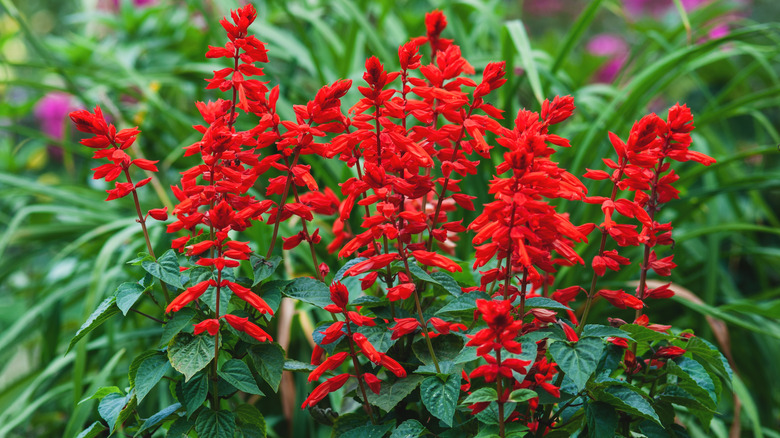
Scarlet sage is an easy plant to grow and with the right soil, sun, and water conditions, needs very little maintenance making it a nice choice for newbie as well as seasoned gardeners. If you are buying seeds or seedlings from a nursery, make sure to check the color since scarlet sage comes in pink and white as well as brilliant red. If you've determined you live in plant hardiness zones 8-11, you'll benefit from the plant's ability to self-seed. Self seeding is possible in zones 6 and 7 also, in the right situations. In colder climates you will need to overwinter them indoors or replant them each year in late spring.
When choosing places in the garden to grow scarlet sage, look for spots that get a lot of sunlight daily. This hardy plant can handle a variety of soil types but will thrive in loamy soil with compost mixed in. Watering is needed regularly and in some cases could be required daily if they are planted in containers. Fertilizing involves using a slow-release variety in the spring, such as GARDENWISE 10-10-10 slow-release fertilizer. Follow directions on the container for frequency. Pruning is an important step in the care of your scarlet sage. Pruning in the early spring encourages your plant to produce more blooms and have a bushier appearance. Get rid of all the stems, if any, damaged by cold weather. You can also do a light pruning in late fall.