

The Summer Flower That Has Beginner Gardeners And HGTV's Joanna Gaines Captivated
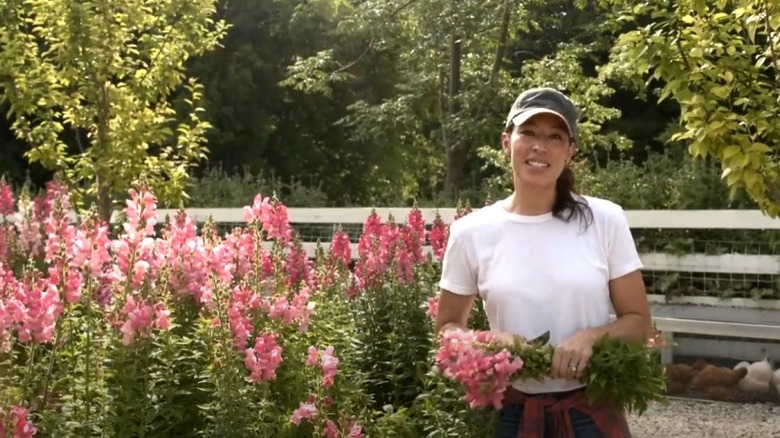
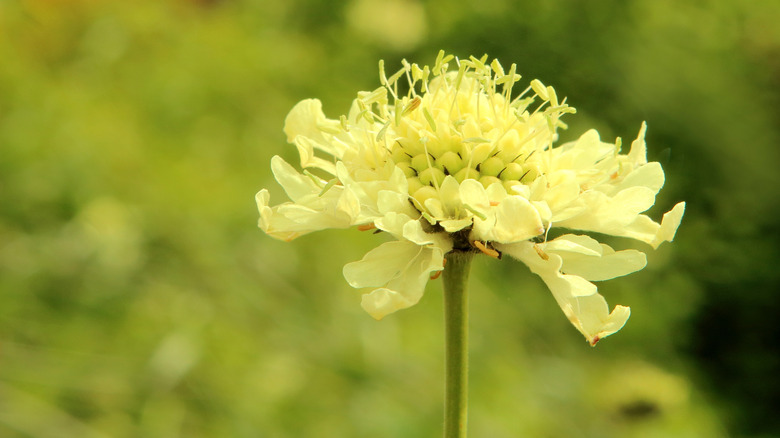
In her Magnolia Journal, designer and HGTV personality Joanna Gaines highlights Fata morgana scabiosa (Scabiosa atropurpurea) as her "absolute favorite bloom of the season." Also known as pincushion flower, this leggy plant produces fluffy petals in shades of white to pale rose, adding a dreamy look to any cottage garden. Easy to grow and maintain, Fata morgana blooms look good not only in your garden, but make for long-lasting cut flowers for your kitchen table. The flowers and their interesting seed heads look beautiful in a tall vase, bringing an antique vibe to any space.
Like the many other varieties of pincushion flower, Fata morgana scabiosa grows two to three feet tall on thin stems that can benefit from a trellis or similar support. This variety of scabiosa thrives in USDA growing zones 3a to 7b, preferring mild climates like the Mediterranean regions where it is native. In areas without wide swings in temperature, this variety of scabiosa will be a perennial, although in cooler regions it is considered an annual that may need to be replanted each spring. Fata morgana is pollinator-friendly, but is also considered a potentially invasive flower in some regions like California. Care should therefore be taken to keep Fata morgana from spreading beyond your garden.
Maintaining those Fata morgana blooms
This hardy scabiosa varietal is easy to grow for even the beginning gardener if you avoid basic mistakes: Make sure it is planted in a sunny spot in well-drained soil. Keeping the soil moist through the heat of the summer will ensure you'll have blooms long into fall, but avoid overwatering to stave off root rot and powdery mildew. Deadheading spent blooms can help keep your scabiosa producing new flowers through the growing season. Gaines notes on the Magnolia Journal that, because the plants become top heavy as they bloom, propping stems up with trellises or by planting among sturdier plants will provide support.
The pale pincushions of this scabiosa pair well with more colorful, tall flowers like larkspur and delphinium, and other varieties of scabiosa. You can also plant lavender and garlic nearby, since they are plants that naturally repel pests like aphids and spider mites who will be attracted to your scabiosa and other cottage flowers. Fata morgana scabiosa will return the following spring if you cut the tops of the stems off and add a layer of mulch around the base to protect the plants from winter freeze.