

Where To Put Your Camera Feeder To Attract The Most Birds
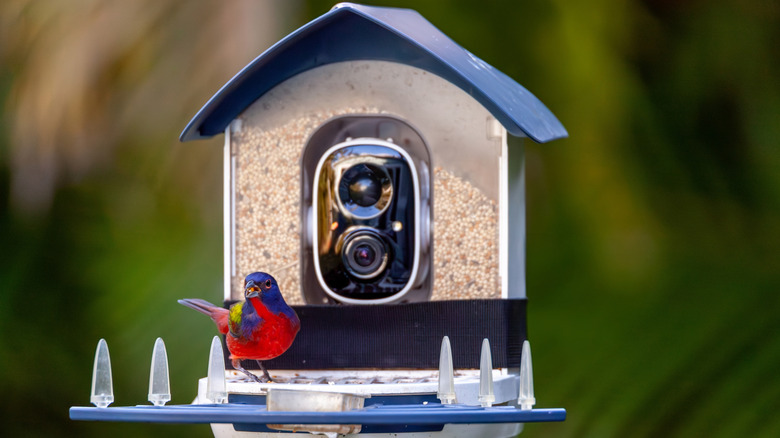
So you've picked the perfect camera feeder; all that's left now is finding an equally perfect place to set it up. While choosing the right spot to install a camera feeder isn't an exact science, there are a few key factors to keep in mind. These will help you pick a place that not only encourages birds to flock to your yard but that is safe for birds to perch and eat. As a general rule of thumb, a good spot for your camera feeder is no more than 12 feet away from a safe area, whether that's a bush or tree.
With the added benefit of watching your backyard birds on the go, camera feeders can elevate your birdwatching experience. Plus, you can pick out details you may not see when watching from afar, like feather details and patterns. Even though these changes are helpful, when it comes to the basics, camera feeders aren't too different from your traditional bird feeder. As a result, choosing where to put your feeder to attract the most birds is a similar process for both traditional and camera feeders.
Here are some tips to keep in mind when choosing the best place to set up your camera bird feeder. Just remember that patience is key when testing out a new feeder, and you can always move your camera feeder around your yard and experiment with new spots to see the most birds.
Picking the best place for a camera bird feeder
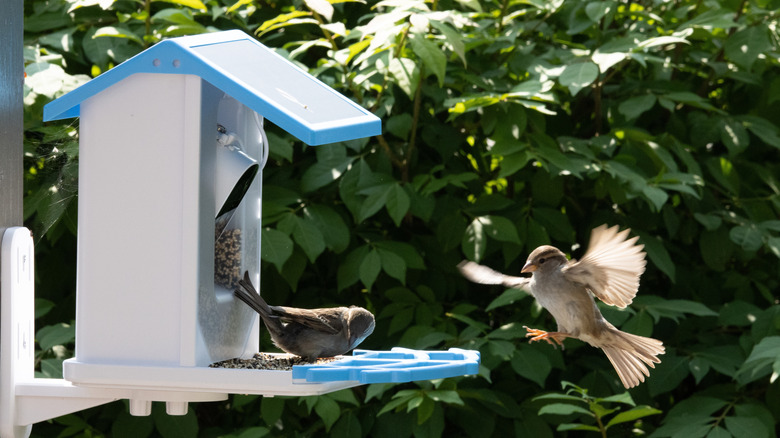
One of the most important things to consider when choosing where to place your camera bird feeder is safety. You'll find that birds are more likely to pick a feeder as their lunch spot if they feel secure from any roaming predators. Nearby shelter also offers the perfect place for birds to perch and scope out your feeder beforehand.
When choosing your spot, you may want to reconsider placing your feeder near a window. According to one 2024 PLOS One study, between 365 million and 1 billion birds in the United States die each year as a result of window collisions . If you do plan on placing your new camera feeder near a window, take steps to make it safe for birds. These can include using decals or other safeguards to help birds see your window and avoid collisions.
The safety of local birds should be top priority when choosing the best place for a camera feeder, however, you should also take time to consider your viewing experience. Camera feeders take out a lot of the hassle associated with birdwatching at traditional feeders, but there are still a few ways to elevate your experience further. For example, lighting can play a large role in the quality of your feeder's photos. Too much sun or shade can make it difficult to make out the birds at your feeder through the camera. Like when using a handheld camera, facing your camera feeder north can keep the sun from washing out your shots.