

A Simple Nighttime Solution That Will Help You Locate Pests On Your Tomato Plants
We may receive a commission on purchases made from links.
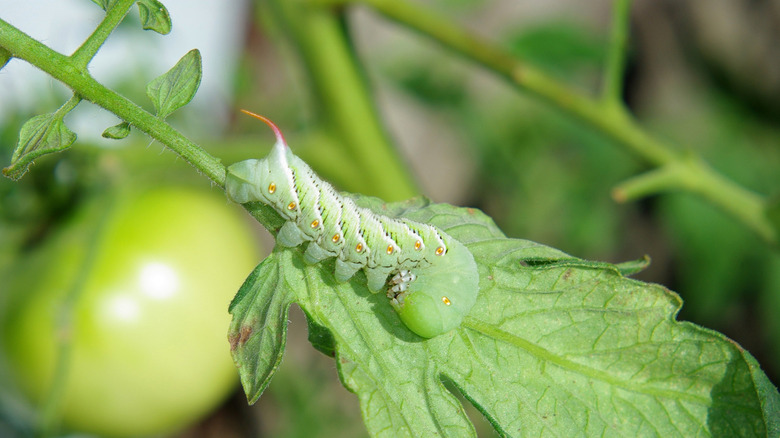
After spending weeks starting your tomatoes the right way and nurturing them, the last thing you want to see is signs of hornworms. Chewed-up leaves, scarred tomatoes, black droppings — these are all signs that you may have a hornworm problem on your hands. Tomato hornworms (Manduca quinquemaculata) aren't actually worms: They're caterpillars that grow into large hawk moths. However, while hawk moths are helpful pollinators in your garden, hornworms are more likely to make a meal out of your tomatoes than help pollinate them. Unfortunately, their bright green bodies act as camouflage, so finding these sneaky snackers on your tomato plants can be difficult. That's where a blacklight comes into play.
During the day, finding hornworms among similarly colored foliage and unripe fruit can be a challenge. However, if you return to your garden at night with a black light, you'll find that hornworms glow under UV light. Since your tomato plant won't, this makes quick work of this hornworm's disguise and makes picking them off your tomato plants a breeze.
Using a blacklight to find hornworms in your garden
The first step to lighting up the hornworm treating your tomato plants like a buffet is choosing the right blacklight. Since you'll want a free hand to pluck the hornworms from the stems and leaves of your plant, you may want to opt for a handheld option, such as the Vansky UV flashlight.
With your blacklight in hand, all you need to do is shine it on tomato plants and look for signs of hornworms. Growing your tomatoes in an organized container garden using a genius solution can help eliminate some of the bending and kneeling this task requires. Because hornworms are fluorescent, many gardeners have seen them glow brightly under UV light. While this is typically used as a defensive mechanism and health indicator for hornworms, it makes it easier to find and remove them from your tomato plants.
Although they may look intimidating with their spiky appearance, hornworms are actually harmless. As a result, you don't need to worry about them biting or stinging you — but gloves are always recommended as an extra precaution. Once you spot a hornworm on your plant, you simply pluck it from the branch to remove it. Because hornworms do grow into beneficial pollinators, you may choose to relocate the culprit a safe distance from your tomato plants. However, you can also use them to attract more bug-eating birds to your garden for future pest control.