

How To Determine The Best Fishing Boat Size For Your Next Adventure
We may receive a commission on purchases made from links.
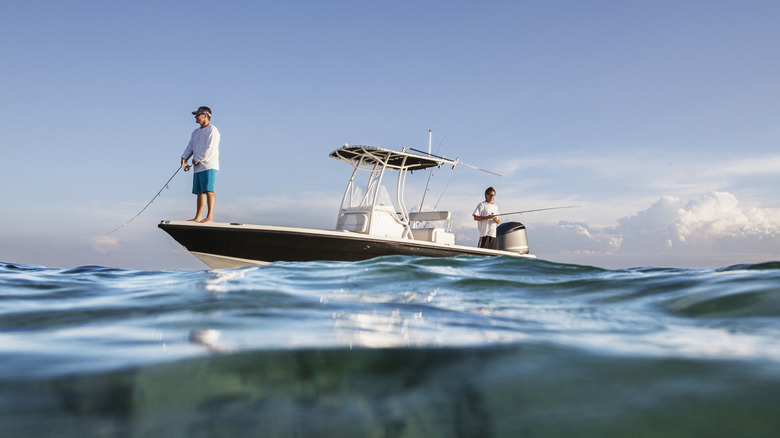
Although millions of American anglers fish from boats, their boating needs are far from homogenous. When it comes to choosing the right size boat for your fishing adventures, bigger isn't always necessarily better. The best boat for each fisher and fishing situation varies on a number of factors. This applies to the boat size as well. As a professional fishing guide and boat captain, I have been at the helm of boats ranging from 8 to 65 feet long and 2 to 20 feet wide. Through those experiences I've learned that the right size boat can be a great fishing platform, while the wrong size can hinder your efforts and, at times, be downright dangerous.
So, how to determine the best fishing boat size for your next adventure? That comes down to several considerations, including where, how, and when you like to fish. You also have to take into account how many anglers will be on board, the conditions of the launch areas, capabilities of your tow vehicle, and where you may be storing the boat between uses. Of course, budget also plays a role. However, financial considerations aside, picking the right sized boat for you may still require a few compromises when you consider all the variables involved in the decision. With that in mind, you will need to prioritize the different factors to help you best decide where you are willing to compromise if necessary. You may also find you actually need more than one boat!
Type of fishing
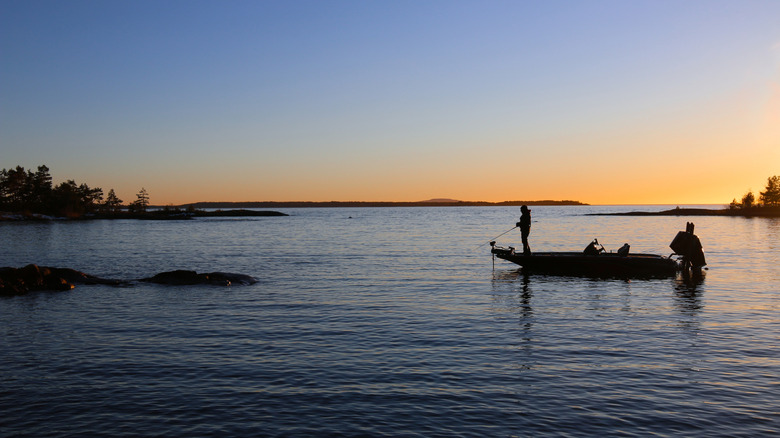
The first thing you need to consider is the type of fishing you enjoy or partake in most often. This will give you some guidance in a couple of ways. For one, there are boats specifically designed for different types of fishing — bass fishing, offshore fishing, inshore bay fishing, etc. Most often, these specially designed boats come in a range of lengths. Most bay boats, for example, are 18 to 24 feet. So, if you are in the market for that style of boat, your size options will be narrowed to the available range.
Even within the range of these specialty designs — or if you are looking for a multipurpose boat or building from a basic hull — there will be size considerations based on how you like to fish. Using the bay boat example, if you are only using the boat to get to a spot in the bay then get out and wade fish, the overall size may not be as important. However, if you intend to also use that boat to do some trolling in nearshore waters, you may need a larger boat to make room for a leaning post, rocket launchers, and more.
Going with a larger boat may also be necessary to ensure enough room for storage and other amenities required for your type of fishing. If you plan to fish bass tournaments, for example, you will need ample storage space for loads of rods and tackle. The boat will also need to be large enough to accommodate sufficient livewell space for (hopefully) prize-winning catches.
Type of water
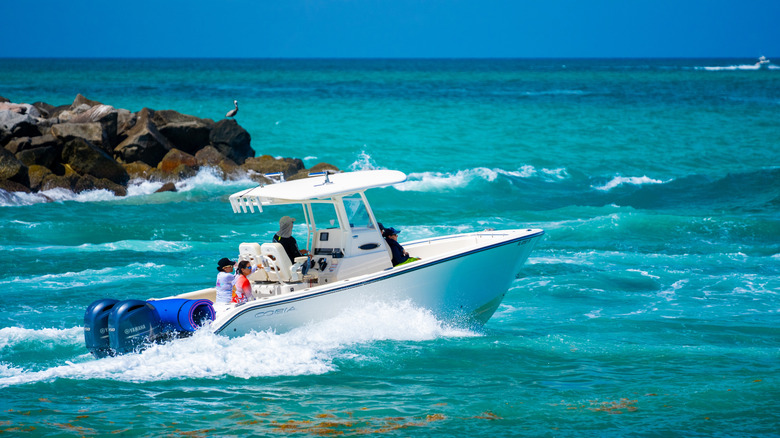
The type of water you will regularly be fishing will also play a big role in the size of boat you need to buy. While hull design definitely plays a role in handling and stability, as a rule, longer boats offer smoother rides and wider ones are more stable. This isn't just about comfort, it is also about safety. One of the most common ways people die while fishing is boating incidents, many of which are a result of capsizing. Attempting to cross or fish a large, rough body of water in a boat that is too small can have dire consequences. So, if you routinely spend time on large, wide-open bodies of water that can become rough, you may need to go with a larger boat just for safety.
But, before you go out and buy the biggest boat you can find, there are also some drawbacks to consider. Longer and wider can also mean less maneuverable. This can prove to be a major disadvantage if you are typically fishing smaller bodies of water. Since these areas are less likely to get as rough, the safety concern isn't as great as being able to efficiently operate in tight quarters. With that in mind, it's important to balance the added comfort and safety of a larger boat with the nimbleness of a smaller one.
Number of passengers
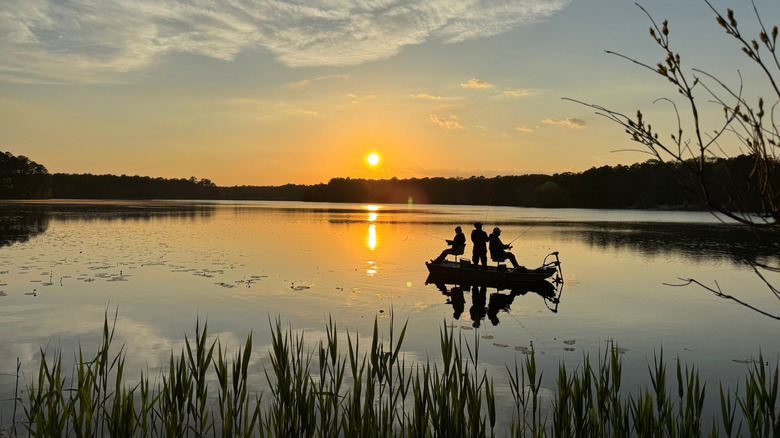
While the number of people on your boat may vary from trip to trip, you need to have an idea of both the average and maximum you will have onboard when deciding on the size boat you need. Once you have that figure in mind, first check the USCG rating for the boat, which is usually affixed to the transom. Make sure the amount of people you intend to take doesn't exceed the Coast Guard limit.
However, that is just step one. The USCG limit only shows the number of passengers the vessel is certified to legally carry. In addition to that, you need to make sure there is actually room for everyone on board to be able to fish. This determination will primarily depend on the style of fishing and the experience of the fishermen. Vertical jigging or trolling, for example, takes less room than casting, which requires sufficient room between anglers for the rod and lures to pass. In regards to experience, more experienced casters can typically work in less space, even if it means adjusting their casting motion. But if you are regularly taking family or younger kids who aren't as proficient, you will need to allow for more room.
Towing capabilities and available launch sites
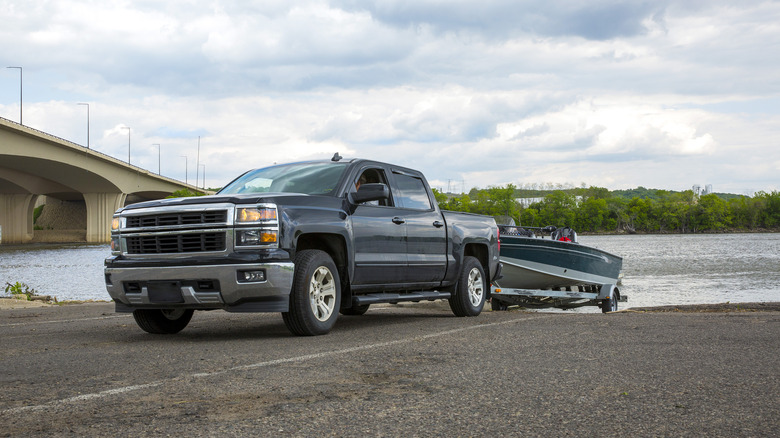
One of the essential things to keep in mind when buying a boat is how you intend to transport it. There are several factors to consider when determining whether your tow vehicle is actually capable of hauling a boat. First is the tongue weight, which is the rating for how much weight the tongue of the trailer can exert on your bumper. Beyond that, the vehicle needs to have the power to be able to pull the boat and sufficient brakes to stop it.
Even if your vehicle's specs say it can handle the task, it is important to take into account the route as well as the launch area. If getting to the boat launch requires going up and down steep inclines, that will require more power than towing over flat land. Additionally, consider the ramp or ramps which you will regularly use for launching. Some ramps are so steep, they may require a 4-wheel drive vehicle — or at least a very powerful 2-wheel drive — to pull out any boat of substantial size. Such a scenario is actually possible even in flat coastal areas.
Beside the grade of the ramp, consider the dimensions. Some ramps aren't long or wide enough to handle larger boats. Some larger models are also more difficult to launch and load singlehandedly. Tying up a boat launch area an excessively long time because your vehicle can't pull the boat up the ramp, or the boat is too unwieldy for you to launch by yourself, is a major breach of boat ramp etiquette. Before deciding on the size of boat, make sure you, your vehicle, and the ramp you use most often can handle it.
Storage capacity
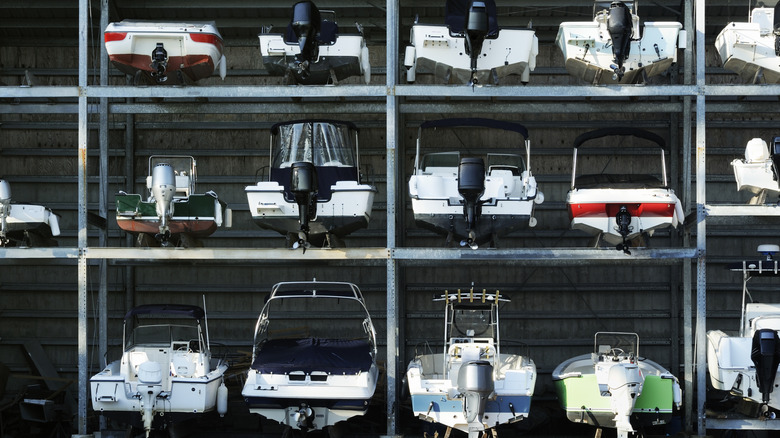
The final thing you should consider is where are you going to keep this boat? While this factor is often overlooked during the boat-buying process, it is critically important. So, before you make a final choice on buying a new boat, you need to decide where it will be stored and work within the dimensions of the storage site.
Many boaters opt to keep their boats at home. This often means the boat size is limited by garage or carport space. Although you may be able to store a boat in your driveway or yard — which can typically accommodate a bigger boat — keep in mind that exposure to the elements can degrade boat hulls and equipment. So if you are choosing to keep your boat stored in an open-air space, it's a good idea to invest in an iCover trailerable boat bover or similar product to provide protection against the sun, dust, and other damaging elements.
Of course, you can also always rent a storage site for your boat. There is no shortage of facilities to choose from, including self-storage units, dry stack storage facilities, and both dry and wet slips at marinas. This can often allow you to store a larger boat than you would be able to at home. Another advantage of renting space is these storage areas are often at or near the water body, minimizing or eliminating boat towing. However, they also come with an ongoing cost, which can significantly add to the expense of boat ownership.