

The Patio Flooring Feature You Should Think Twice Before Trying

When it comes to outdoor patio design, flooring is one of the most significant elements necessary to crafting a fun and inviting space for entertaining. The flooring sets the tone for the space, influences the amount of upkeep required, and plays a major role in your investment into your home. Whether you're redoing your patio ahead of a sale, trying to make outdoor updates that add serious value to your home, or simply in the market for an upgrade, there are a few major pitfalls to remain aware of. One flooring option — stamped concrete — has long been touted as a relatively low-cost option and was very popular in the 1980s and '90s. These days, however, this alternative to real stone is considered to be fairly outdated by some designers, and offers an aesthetic that may turn away many modern home buyers.
Under the best circumstances, stamped concrete can offer a passable pattern that allows you to make the most of your space with rustic furniture and the addition of outdoor rugs (which need to be cleaned correctly). However, some people feel stamped concrete designs take away from the natural beauty of a patio, and create additional difficulty with upkeep and maintenance. To understand exactly why stamped concrete has fallen out of favor with a certain subset of homeowners, and what alternate flooring options you should consider if you're on a budget, be sure to read ahead.
The problem with stamped concrete flooring
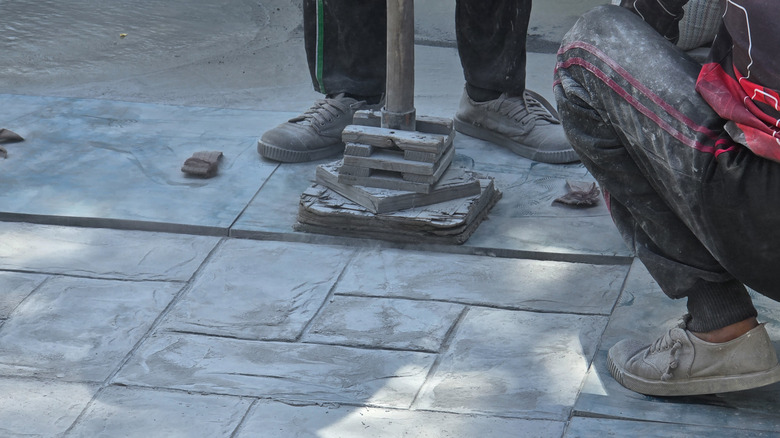
Beyond its drab look and muted colors, stamped concrete has become the pariah of patio floor options thanks to its tedious upkeep. From hairline cracks to fading color, this flooring substance can lose its charm quickly without frequent re-sealing and repairs. Unlike modular materials such as bricks and hardwood slats, stamped concrete can't be easily sectioned and replaced or patched up when damaged, and color matching is difficult. This is especially important when dealing with stamped concrete placed around pools or areas with high foot traffic.
The material also weathers significantly with time, leaving behind a worn-down surface with little texture and faded colors. Obviously, weathering can have an impact on just about any flooring surface, but stamped concrete tends to weather faster than most alternatives. When this faux stone material wears down, it also poses a potential safety hazard, as it can become highly slippery when wet if not dealt with properly. At the end of the day, there are still plenty of homeowners who swear by the floundering flooring, though it seems likely that many others are looking to switch to something more reliable, durable, and aesthetically pleasing.
A few solid alternatives to stamped concrete
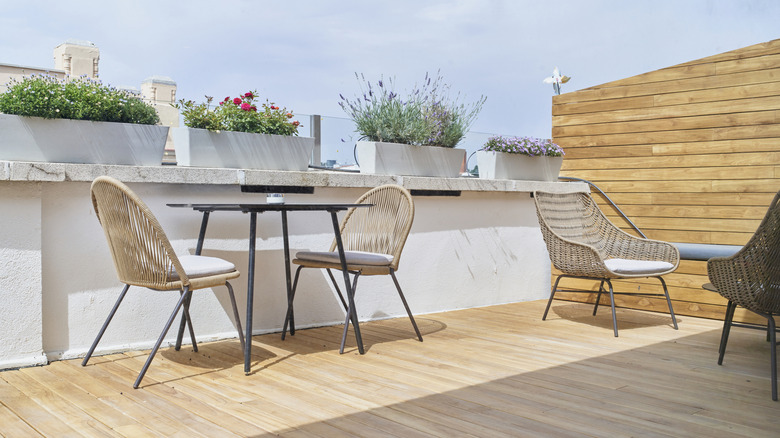
If you're going for a stylish, durable, and cost-effective patio, there are plenty of ways to achieve your goals without resorting to concrete at all. Consider something like brick, tile, or pressure-treated wood. If you really love the muted colors of concrete, minus the fuss, you can also look into bluestone, which, despite its high price tag, is considered desirable in many neighborhoods for its natural look. These thermal treated bricks offer a dark, quiet tone that won't draw eyes away from your patio centerpieces, but also won't dampen the area with a drab, flat look. Other options such as sandstone and slate allow you to expand the color palette of your patio, while providing a natural, rustic vibe sure to invite lively discussion and positive comments from your neighbors. Interlocking wood tiles are also a big hit these days, especially because individual components can be replaced as necessary, without needing to redo the entire section.
If you're set on stamped concrete, be sure to take the cons of this substance as a challenge and not an instant defeat. Outdoor rugs and modern furniture can be used to soften the look, while ornamental lawn details such as bird baths, flower gardens, or an old barrel upcycled as a gorgeous water feature can help to draw the eye elsewhere. Though some may deride the look and upkeep of this patio flooring, you may have a personal affection for it which supersedes the downsides. When it's all said and done, you should always be decorating for your own personal tastes, especially in your forever home.