

Two Delicious Fruit Bushes That'll Have Songbirds Flocking To Your Yard
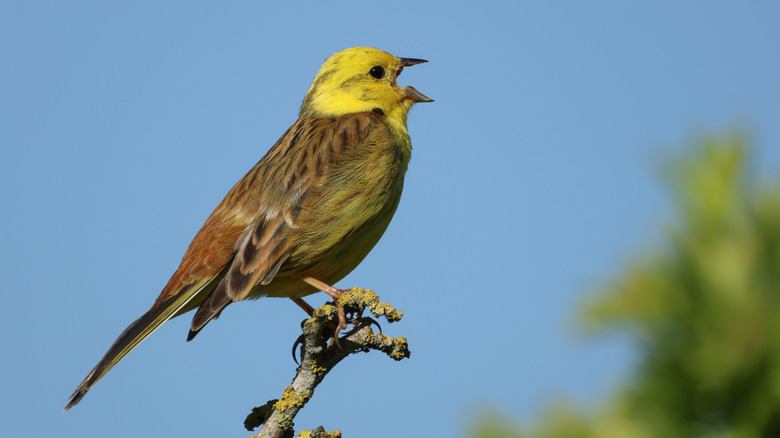
There's nothing quite like stepping out into your garden or yard and hearing a symphony of songbirds making their presence known. With their bright melodies and cheerful chirps, they can bring any yard to life, and it's one of the reasons that so many people want to attract more songbirds. While there are many ways you can make your garden a welcoming environment — such as choosing the right seeds or adding features like nesting boxes and fountains — you can also encourage more songbirds to flock to your yard by adding plants like highbush blueberries (Vaccinium corymbosum) and the black raspberry (Rubus occidentalis).
Highbush blueberries and black raspberries combine two songbird-attracting factors. First, with their namesake fruits, these bushes provide a food source. Their thick foliage also offers shelter for songbirds, giving them a safe place to nest as well as a source of materials for building nests during breeding months.
Planting highbush blueberries and black raspberries can add color to your garden while also inviting more songbirds to visit. If you're interested in adding these bushes to your yard, make sure to do research on how well they grow in your local area, as well if they're invasive or not. Once you're sure these berry bushes are the right choice for your garden, here's how you can get started.
Robins love highbush blueberries
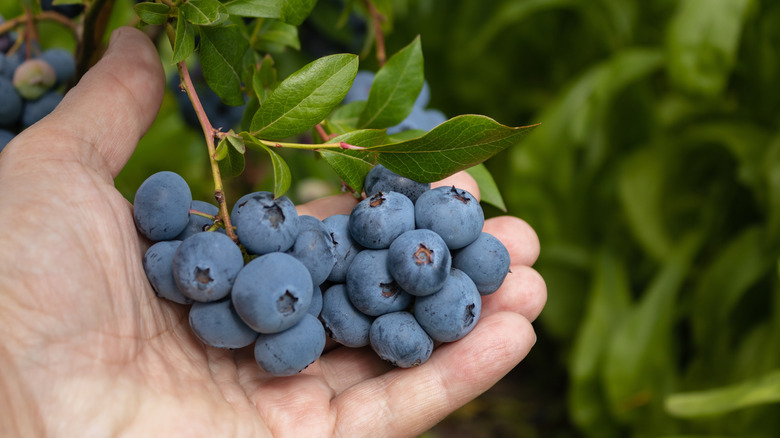
One of the first things to know about these vibrantly colored berry bushes is that they thrive in acidic soil. In fact, you'll find that highbush blueberries do their best in soil where the pH is no higher than 5.5. However, if you're unable to maintain this pH in your yard, don't worry — while they do better when planted directly in the ground, you can also plant highbush blueberries in containers. Just make sure the container you choose is large enough to accommodate this bush, which can grow up to 9 feet tall. Along with maintaining a specific pH, the soil you choose needs to be well-draining. You want to ensure your songbird-attracting blueberry bush has enough water without becoming soggy. Both underwatering and overwatering are common mistakes beginning gardeners make: You'll want to avoid both to have fruit that birds can't resist.
Other than specific soil needs, highbush blueberries are fairly fuss-free. They can grow with sun exposure ranging from partial to full sun, and it's actually recommended to avoid pruning them in their first three years outside of removing damaged pieces. As for their hardiness, they can grow in zones 4 to 10, depending on the variety. Southern highbush blueberries do better in warmer climates, specifically zones 6 through 10, while the northern variety thrives in zones 4 through 7.
Before growing these berries, it's important to remember that highbush blueberries can take up to three years to produce fruit, with a full harvest after five. However, with time, you'll be able to enjoy the birds who love eating this bush's berries, including robins, bluebirds, and towhees.
Planting black raspberries to attract sheltering songbirds
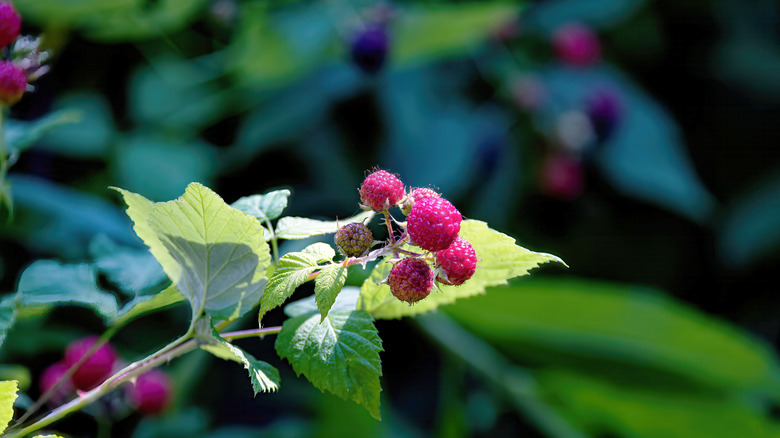
Although there is elbow grease involved in pruning to keep these bushes from spilling across your yard, black raspberries are overall another easy option that even beginners can grow to attract more songbirds. These plants do well in spots with plenty of sunlight, although you may opt to provide them with some shade during the afternoon if you live in a warm climate. Well-draining soil with the right pH is important, as black raspberries grow best in soil that ranges from neutral to slightly acidic. As for hardiness, black raspberries are often grown in zones 5 to 8 (4 if you have frost protection).
If you plant a black raspberry bush, you can expect to see your first harvest typically two to three years after planting. Like with blueberries, it can be a game of patience, but it comes with the reward of attracting cardinals, grosbeaks, blue jays, sparrows, and other birds that not only eat from this bush but use it for shelter.
Both black raspberries and highbush blueberries add color and vibrancy to your yard while acting as a dinner bell for local songbirds. However, when it comes to designing your dream bird-magnet garden, you'll want to avoid planting blueberries and raspberries together. This is because of not only their care differences but also the fact that black raspberries spread easily and can overtake other plants. However, that doesn't mean you have to pick one over the other: just make sure to give each bush plenty of space. You should also avoid planting your black raspberries near red raspberries and wild raspberries, as these plants can carry diseases that can be transferred to your black raspberries.