

Why This Town Is Restricting Bird Feeders
We may receive a commission on purchases made from links.
The town of Ridgewood, NJ got the attention of backyard birders across the country recently when they modified their ban on feeding wildlife in public spaces to include private property. The ordinance also targets the feeding of birds. This move was made in an attempt to reduce the forays of black bears into residential areas, whose population is rapidly rising in New Jersey, as well as other wildlife. The state of New Jersey is also considering legislation which would implement similar restrictions statewide, and it's possible cities in other bear prone areas may do so as well.
The majority of people, of course, are okay with not having bears show up unexpectedly in their backyards. However, others have expressed concern about the restrictions on bird feeders. While some have touted it as a ban on bird feeders, it actually just sets out strict regulations on how and where bird feeders may be used, although feeding birds on the ground is banned. Under the ordinance passed in Ridgewood, residents are limited to no more than three feeders in their yards. Additionally, those feeders must be hung at least 6 feet above ground level and have some sort of seed catcher or containment device that prevents the seeds from falling to the ground.
If passed, the state-level regulations would be even stricter than the city ordinance. For one, feeders would have to be hung 10 feet high, the best height to hang feeders to keep birds safe. The state regulations would also require feeders to be taken indoors and cleaned each night between April and November.
Keeping wildlife away from bird feeders
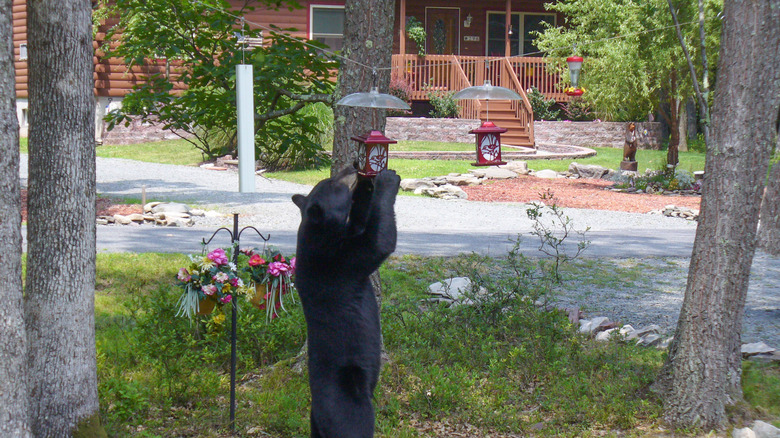
The purpose of bird feeders is to attract birds. However, using seed and nectar feeders in an attempt to attract wild birds to your yard can inadvertently attract other creatures as well, ranging from cats and squirrels to racoons and bears. These animals present potential risks to you and your property, which is one reason to reconsider hanging a bird feeder if you live in bear country. Some species of unwanted wildlife also pose a risk to the birds at your feeder, as they are there not for the seed but to prey on the birds.
The good news is, there are ways you can limit the attraction for bears and other unwanted wildlife. The New Jersey town ordinance is essentially forcing people to take those steps. If passed, the state ordinance would do the same. For instance, one of the best ways to keep bears away from your home is to limit scents and foods which may attract them. Taking feeders in at night, as would be required under the proposed state bill, would work to eliminate these attractions during a time when bears are likely to raid your bird feeder.
Whether you are in an area that regulates such practices or not, it is a good idea to take steps to prevent bears and other unwanted wildlife from feasting on your bird feed. This includes many of the measures outlined above, such as hanging feeders at an elevated height and using a seed catcher tray. It's also helpful to utilize a device such as the North States Two-Way Baffle to prevent squirrels and other small mammals from climbing onto the feeder.