

The Clever Trick That'll Keep Your Petunias Blooming All Summer Long
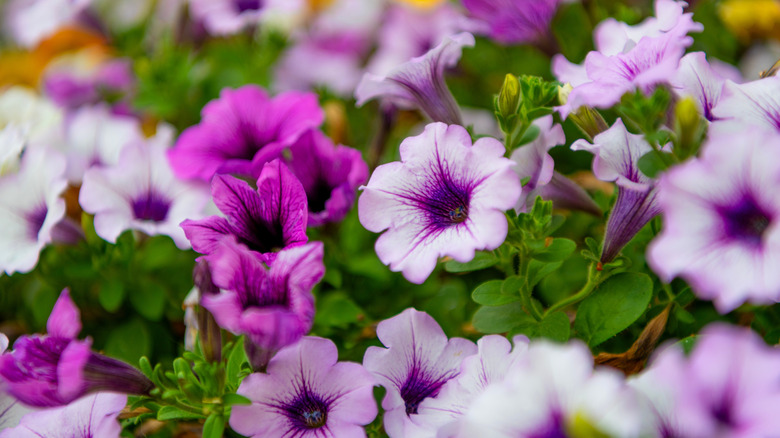
Vibrant and easy to grow, petunias are a favorite among beginner and expert gardeners. These eye-catching trumpet-shaped flowers come in a variety of colors, and their love of full sun makes them a great addition to your landscaping and gardens. However, while petunias are known for being a low-maintenance choice that's perfect for beginner gardeners in need of a fuss-free plant, there is one essential gardening task you won't want to forget about to promote season-long blooms: deadheading. In fact, petunias are the perfect plant to start deadheading to ensure a thriving garden.
While there are plenty of plants that are self-cleaning and don't require deadheading, this easy chore can keep your petunias looking healthier by removing any spent flowers. However, deadheading isn't just about appearances. Instead, it also encourages your petunias to continue growing and producing new, beautiful blossoms.
Thankfully, removing spent flowers from your petunias doesn't have to be a hassle. Deadheading is a simple task that you can easily incorporate into your petunia care routine. Here's how you can deadhead the petunias in your garden to experience more blooms this summer.
How to deadhead petunias for more blooms
Before you start removing spent flowers from your petunias, it's important to first identify what a spent or faded flower looks like. When a petunia bloom is past its prime, you may notice it looks lackluster. It may shrivel up or go limp, or it could even swap its beautiful hue for a drab brown.
When you start to notice these signs, you'll want to go ahead and deadhead your petunia. Otherwise, since flowers on plants are meant to spread seeds, you'll find that your petunia begins focusing on seed production over more blooms. However, in order for deadheading to be a success, you'll need to make sure you're going about it the right way.
If you're not familiar with deadheading, it can be tempting to quickly pinch the petals off your petunia and dispose of them, especially because the spent flower itself pulls away easily from the plant. However, as mentioned in the video above, this technique doesn't remove the entirety of the flower. Instead, you'll want to remove the bloom and its calyx — the base of your flower — which often sports little structures that look like additional leaves. Pinch below the base of the flower to pick it off (most people find this easiest to do without gloves). While this may take a little more time than simply plucking faded petunia petals as you pass by, it's an essential part of successful deadheading for a summer full of show-stopping petunia blooms. Plus, there are plenty of simple ways you can reuse spent flowers in your garden after deadheading, adding an extra reward to this beneficial task.