

Bring Your Struggling Citrus Trees Back To Life With These Helpful Tips
We may receive a commission on purchases made from links.
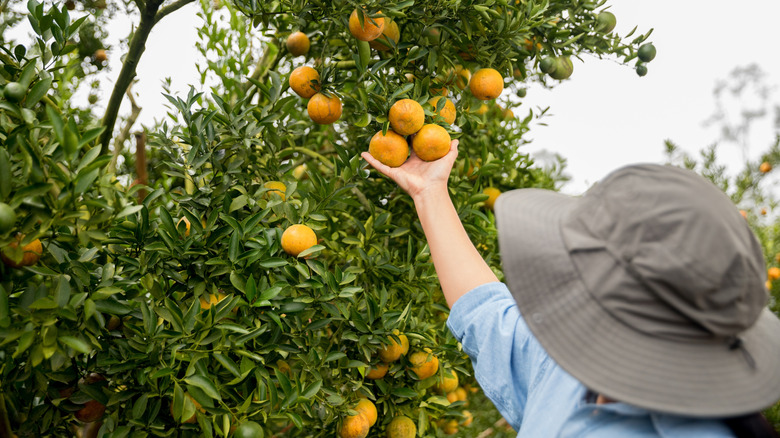
Citrus trees are a great way to add depth, color, and variety to your backyard. They are also a great source for fresh fruit. However, for all their benefits, citrus trees are also prone to a variety of issues that can impact their appearance, health, and fruit production. While some of these conditions unfortunately require professional help, there are often DIY solutions for ailing citrus. If you've noticed any of your trees looking under the weather, there's a chance you can bring your struggling citrus trees back to life with these helpful tips.
At times, the reason behind a citrus looking unwell is as simple as over or under watering. Inasmuch, when attempting to troubleshoot an issue with your citrus tree, it only makes sense to check for the simplest problem first. As with most plants, an overwatered citrus tree may exhibit what it really means when plant leaves start yellowing. If left unchecked, it can also lead to root rot and attract a variety of pests. This isn't necessarily always due to your own maintenance, as heavy rain can also result in overwatering. Nevertheless, if the soil is soggy, try to help it drain by digging a small trench, poking holes deep into the soil with a stake, or adding dry compost into the soil. If, on the other hand, the soil is too dry, which is often indicated by dropping, curling, or falling leaves, give the tree a thorough, deep-soak watering.
While adjusting the moisture level in the soil may be enough to get your citrus tree to spring back to life, you should be aware there may be other issues with the tree as well. To that end, check your trees often for symptoms of various issues and take corrective action as needed.
Various diseases affect citrus trees

Citrus trees are susceptible to a variety of diseases. Among the most common are citrus canker, citrus greening, and root rot. Citrus canker is usually pretty easy to identify by the lesions it produces on the leaves, limbs, and fruit of a citrus tree. If you see such symptoms, remove any affected fruit, as well as prune away all limbs and leaves showing signs of the disease. Once that is done, treat the tree with a fungicide containing copper, such as Capt. Jack's copper fungicide.
Citrus greening, also known as Huanglongbing (HLB), is a devastating bacterial disease that stops the flow of nutrients from the soil into various parts of the tree. Without necessary nutrients, the tree begins to exhibit a number of symptoms, including yellow or mottled leaves and oddly-shaped fruit. This disease also prevents the tree from continued growth. Unfortunately, once infected a tree cannot be cured. You essentially have two options — remove the tree so nearby citrus trees are not infected, or treat the tree in order to try and keep it alive longer. Treatment involves root pruning, applying botanical oil to the limbs and trunk, and providing nutrients.
A fungal infection known as root rot is also prevalent within citrus trees. This is often the result of overwatering or poor soil drainage. Yellow or wilting leaves, soggy ground, dark roots, and a stench emanating from the base of the tree are all signs of root rot. To treat root rot, dig away the soil from around the plant, then cut away any rotted sections of root. Apply fungicide and backfill the area around the roots with a fresh, well-draining soil mix. To prevent root rot from continuing, identify and mitigate any drainage issues.
Pests can impact citrus trees
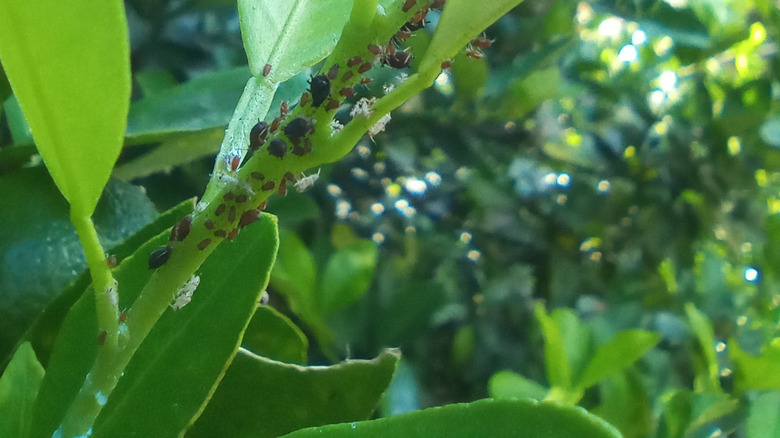
There are a number of pests attracted to citrus trees. Aphids, caterpillars, scale insects, and various flies are among the more common. The absolute best way to keep these bugs from damaging your citrus tree is to take good care of it, as a healthy tree is less likely to be targeted by pests. However, keep in mind too much of a good thing can be bad. For example, overwatering or over fertilizing can actually weaken a tree and make it a prime target for pests. Regular treatment with insecticide is also recommended, although some pests are more resistant than others. Those wishing to avoid chemicals can also surround citrus trees with plants that repel bugs naturally.
Of these pests, aphids are among those you are most likely to see. If you do see large numbers of aphids on your citrus tree, a prompt insecticidal treatment is in order. If you want a chemical-free treatment option, you can also banish aphids with cinnamon sprinkled liberally around the base of the tree as well as on the leaves and branches, paying particular attention to where you see concentrations of aphids. Similarly, if you find your tree infected with scale insects, an insecticide is the most effective way to rid the tree of them, although they can be quite resistant. Of the options, horticultural oils seem the most effective. However, you can also prune away affected limbs and utilize organic oils to attempt to manage an outbreak.
Caterpillars are another enemy of citrus trees. There is really no easy way to get rid of caterpillars. Hand-picking remains the best option, although it is time consuming. With that in mind, attracting birds that act as garden helpers by eating caterpillars and other pests is helpful as well.
Nutritional deficiencies can cause citrus trees to suffer
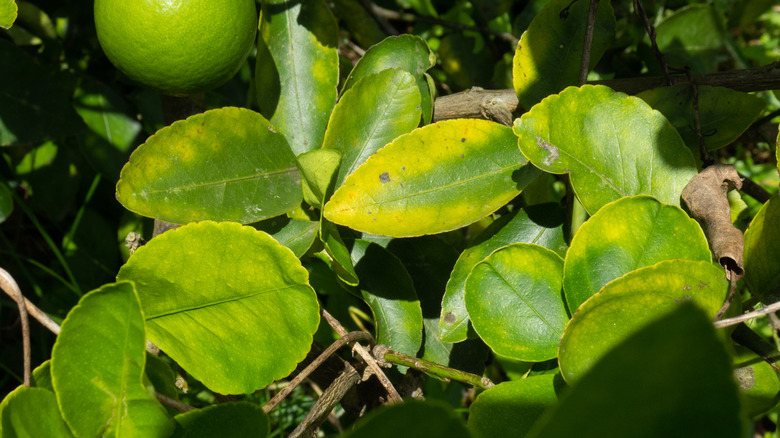
A variety of nutritional deficiencies can cause citrus trees to suffer various maladies. The key is identifying which nutrient or nutrients your tree is lacking, then making the proper soil correction. Trees which are deficient in nitrogen typically will have leaves that turn light green or yellow. If the fruit from the tree has an excessively thick rind, it may have a phosphorous deficiency. Conversely, potassium deficiency causes a thinner rind, as well as smaller, smooth skinned fruit. Magnesium deficiency causes yellow splotches on the leaves, while trees lacking in manganese will have dark green bands form on the leaves. Zinc deficient trees will have yellowish leaves with dark green veins.
While those physical signs can often be good indicators, a soil test is the best way to get an accurate diagnosis of the nutrients your tree may be lacking. Use the results of the soil test to determine what you need to add and select a fertilizer that is formulated to meet those needs. Be careful not to overdo it, as over-fertilization can lead to toxicity.
Sooty mold
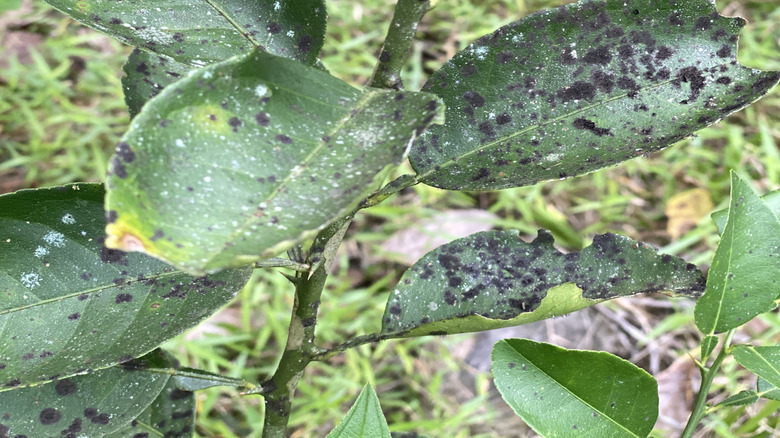
Sooty mold is a black fungus that often clings to citrus tree. It feasts on the secretions left by various insects, including aphids. So, in order to eliminate sooty mold, you first have to get rid of the insects providing it a food source. As mentioned above, this can be done with various insecticides and/or natural remedies. However, until the secretions-leaving insects are gone, you won't be able to get rid of the sooty mold.
Luckily, the sooty mold itself typically doesn't damage the tree, so if this process take awhile your tree should still be fine. However, if left unchecked, sooty mold can eventually cover trees so thoroughly as to effectively block the light which the tree needs for photosynthesis, which will impact its ability to grow. Once the insects are gone the life span of the mold is limited, as their food source has been taken away. Typically, sooty mold will fade away as it uses up the last of the remaining insect secretions. However, you can expedite the process by rinsing your tree with a soapy water mix, followed by a thorough freshwater rinse.