

The Shade-Loving Flower That'll Look Perfect In Your Hanging Baskets
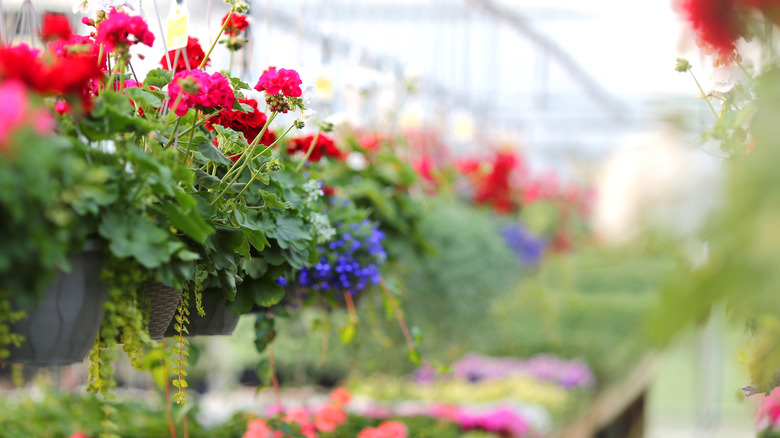
If your porch doesn't get much sunlight during the day, you may think that hanging baskets overflowing with beautiful blooms may be out of the question. Don't give up on your hanging basket dreams just yet. While there are many flowers that require hours of full sun, you can also find a variety of shade-loving flowers that can thrive on your porch with low light. In fact, plants like the two-toned wishbone flower (Torenia fournieri) are the perfect choice for hanging baskets that may not receive as much sunlight during the day.
Colorful, easy to grow, and pollinator-friendly, wishbone flowers are a great option for gardeners of all skill levels looking to add a splash of color to their hanging baskets. These delicate little flowers sport two-toned blooms ranging from purple to blue with a striking yellow center that's bound to catch the eyes of your guests and hummingbirds alike. If you use the trailing variety, your wishbone flowers will spill out of your hanging baskets, giving them a full, vibrant appearance.
With a show-stopping appearance and the ability to grow in USDA zones 2 through 11, wishbone flowers are a popular pick for adding life to the shadier parts of your yard and porch. Here's how you can start growing wishbone flowers for your hanging baskets.
How to grow wishbone flowers in hanging baskets
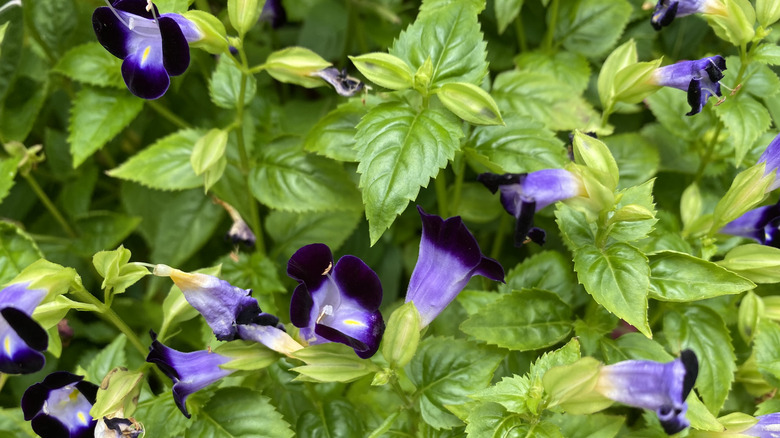
Growing eye-catching blooms can be intimidating for the beginner gardener. However, those who are still honing their green thumb don't need to turn down the wishbone flowers. These flowers are easy enough for even the inexperienced gardener to grow thanks to their overall hardiness and low-maintenance care.
To grow your own wishbone flowers, you can choose to start with seeds or adult plants. Starting with seeds takes extra elbow grease, but it's still a beginner-friendly process. It's important to note, however, that the trailing variety doesn't produce seeds, so you'll be planting adult plants. While these flowers aren't fussy about light, giving them the right soil can be the difference between half-hearted blooms and hanging baskets overflowing with two-toned flowers. Wishbones do best in well-draining soil with plenty of nutrients. With that in mind, you should aim to add fertilizer to your wishbones every few weeks during their growing months. Over-fertilizing is still a risk, however. So use a slow-release version and keep an eye out for the signs of too much fertilizer, like leaves turning yellow, adjusting your routine as needed.
Outside of the need for fertilizer, wishbone flowers are fairly hands-off. This is one reason why they're perfect for hanging baskets. Just make sure you provide the plants with plenty of water. They prefer soil that is consistently moist, so you should water if you notice that the top layer of soil is dry. If you live in a hot area, this can be as often as daily. However, you don't want to overwater your wishbones; overwatering is one of the most common mistakes gardeners make, and it can do more harm than good for your vibrant wishbones.