

The Two Types Of Snakes You'll Actually Want To See In Your Garden
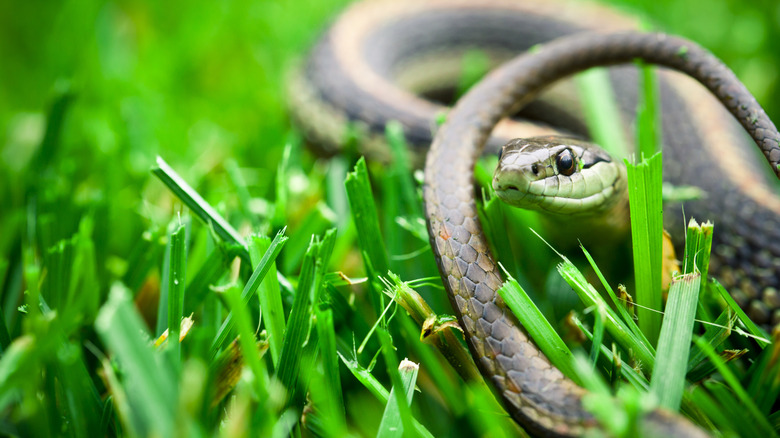
There are many places you likely don't want to see a snake around your home, but your garden isn't one of them. Snakes are a natural, beneficial addition to your garden. This is because of their diet, which often consists of the insects and rodents that make a meal out of all your hard work. If you want to harbor the pest-eating advantages of snakes, there are two species in particular you may want to share your garden with: the Dekay's brownsnake and red-bellied snake.
It's important to note that both species are non-venomous (there are ways to tell). However, you should still avoid handling snakes and other wild animals — both for your safety and theirs. While you don't need to worry about venom from the Dekay's brownsnake or red-bellied snake, and bites are rare, both can still deliver a painful bite with the risk of infection. Handling wild animals can also cause unnecessary stress for them. Snakes usually won't attack unless provoked or threatened. So if you happen across a snake while gardening or otherwise outdoors, you should avoid such unexpected behavior as handling it, instead giving it space to go its way.
Dekay's brownsnake: identification and benefits
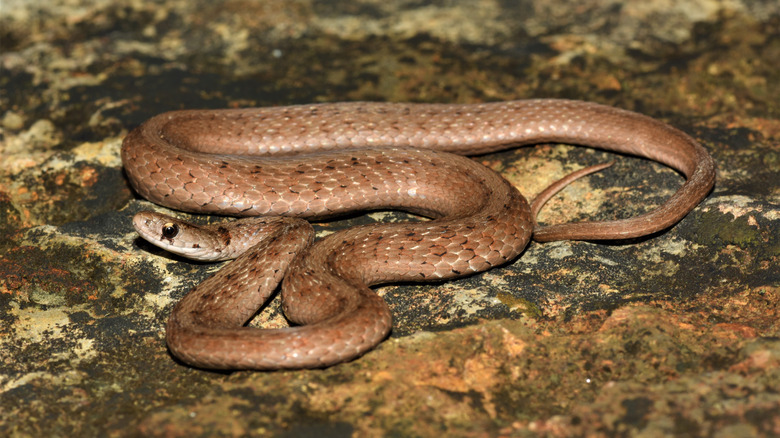
Dekay's brownsnake (Storeria dekayi) is a small, non-venomous snake that prefers to spend its time hidden rather than out in the open. Adults of this species can grow to be between 9 and 13 inches long. As far as appearances go, they range from grey-brown to brown in color. Once they reach adulthood, you can identify them by the lighter stripe running down the center of their back and the darker coloration of their heads. Before adulthood, though, these characteristics may not be as visible. Instead, when trying to identify a young Dekay's brownsnake, look instead for the white band across the back of their head.
Dekay's brownsnakes are native to North America and, in the United States, can be found in the central and eastern regions of the country. They thrive in several different habitats, including wetlands and forests, and these small snakes have no problem making their homes near residential areas.
When it comes to their diet, Dekay's brownsnakes are the perfect pest-control for your yard and garden. These little snakes eat a variety of invertebrates. This includes slugs, worms (including beneficial earthworms), and even snails. They also eat insects. While there are many ways to keep pests out of your garden, having snakes like the Dekay's brownsnake take up residence provides an extra line of protection.
Red-bellied snake: identification and benefits
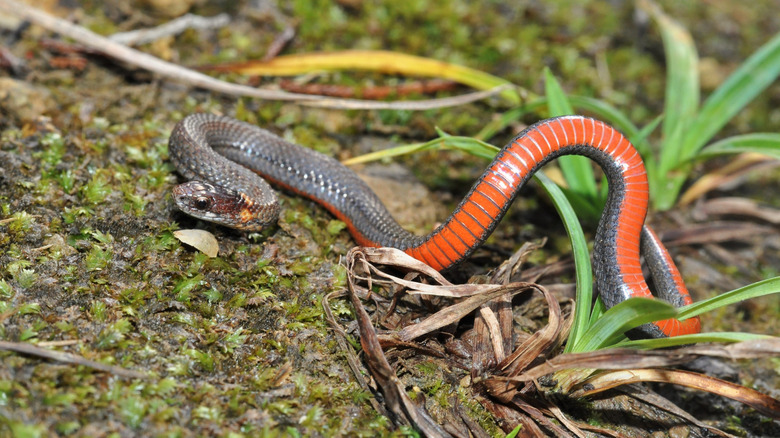
Dekay's brownsnakes aren't the only helpful, non-venomous addition to your garden. Red-bellied snakes (Storeria occipitomaculata) are another great form of natural pest control, with a diet made up mostly of slugs and worms. However, they also eat snails, pillbugs, and even salamanders.
Red-bellied snakes have a range similar to that of the Dekay's brownsnake in the United States, calling the central and eastern regions of the country home. However, there are two different subspecies: the northern red-bellied snake living in the north and the Florida red-bellied snake living in the south.
As far as appearances go, both subspecies of the red-bellied snake look similar. They're smaller than most Dekay's brownsnakes, growing to reach lengths of 8 to 10 inches. They're most recognizable by the red ventral scales on their bellies. While this red belly makes them easy to recognize, you can also identify red-bellied snakes by their markings. The northern subspecies often sports three spots on their neck. In the Florida subspecies, however, these separated spots are replaced by a collar or ring around their neck. In both subspecies, these markers are pale compared to the rest of the body.