

Add Tropical Interest To Your Garden With A Unique Flower Hummingbirds Love
We may receive a commission on purchases made from links.
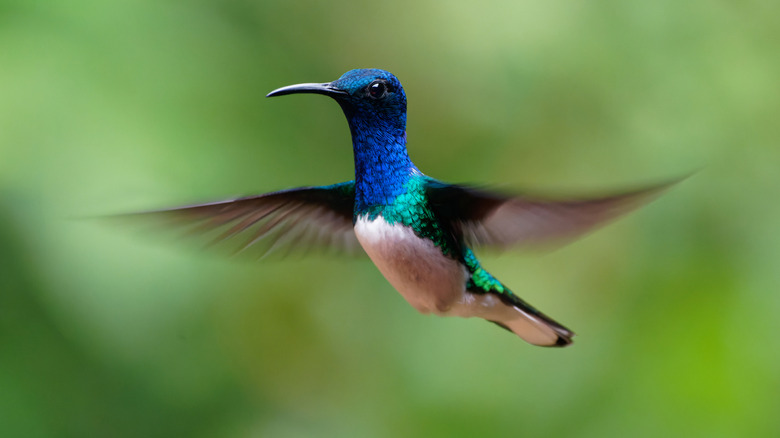
Both backyard birders and gardeners enjoy the presence of hummingbirds. They are among the birds you should be glad to see in your garden, as they are effective pollinators and a form of natural pest control against pesky insects such as mosquitoes. Additionally, their aerial acrobatics make them entertaining to watch. In order to attract more hummingbirds, it helps to add color to your yard. You can also grow stunning plants that attract hummingbirds. You can do both while adding tropical interest to your garden with a unique flower these mini helicopters love — the aptly named bird-of-paradise.
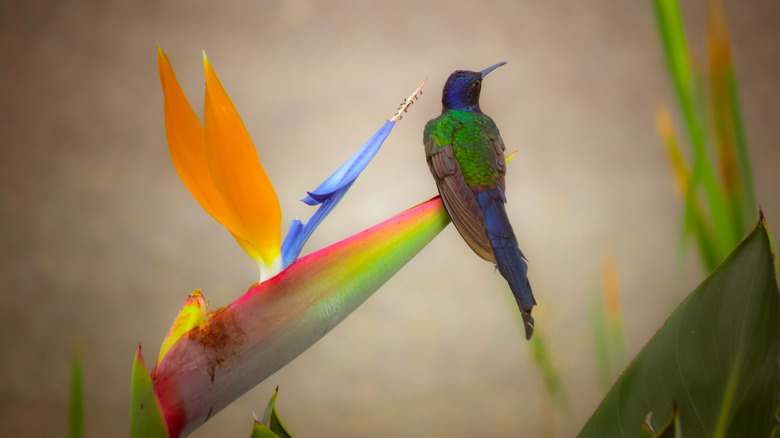
Hummingbirds are known to be attracted to colorful flowers, especially those with hues of red, yellow, and orange. Several varieties of bird-of-paradise plants prominently feature these colors on their blooms, particularly strelitzia reginae. Hummingbirds are also attracted to bird-of-paradise plants because of the nectar they produce and the fact the tubular shape of the flowers are ideal feeding platforms for the long-beaked hummers. Additionally, bird-of-paradise plants tend to bloom for an elongated period of time, providing nourishment for hummingbirds throughout spring, summer, and fall.
Planting and caring for bird-of-paradise
Generally speaking, bird-of-paradise plants are considered easy to grown and care for. This at least partially due to the fact they can thrive in a variety of lighting conditions, ranging from full sun to nearly full shade. Unfortunately, however, it is restricted to the southernmost regions of the continental United States, doing best in hardiness zones 10-12. However, it can be grown indoors most anywhere and, in most cases, can be moved outdoors during the warmer parts of the year if it is grown in a container.
Whether planting indoors or outdoors, the soil must be well-draining. Additionally, if you choose to plant bird-of-paradise in a container, you should utilize a large model to allow the plant sufficient room to grow. Otherwise, bird-of-paradise isn't particularly finicky about soil, as it grows well in neutral, alkaline, and acidic soil.
Bird-of-paradise can be started from seed or you can purchase live bird-of-paradise plants from the Farm Plant Store or elsewhere to transplant to your garden. A third option is to divide mature plants to propagate. When starting from seed, it is usually best to soak the seeds for a couple of days first before starting the seeds indoors. Once the seedlings have grown to at least six inches, they can be transplanted or repotted. However, do not plant outdoors until after the final frost. Throughout the year, bird-of-paradise requires regular watering and occasional fertilizing, but not much else is required in terms of upkeep and maintenance. It shouldn't be long before hummingbirds take notice!