

Grow Tasty Sweet Corn In Your Garden With These Helpful Tips
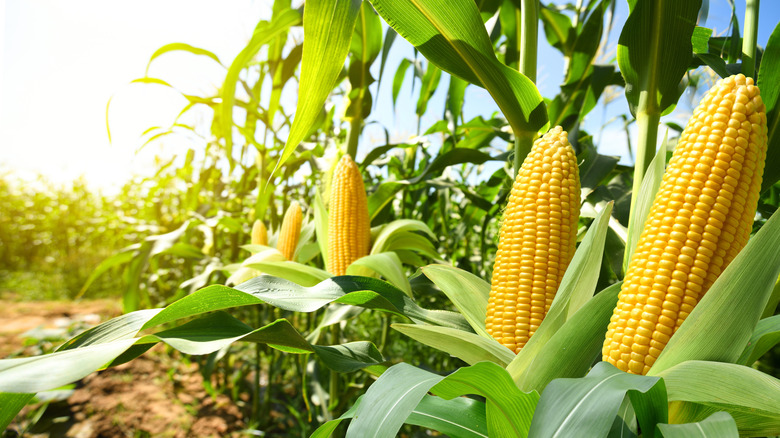
Whether you're looking to boil, grill, or sauté sweet corn for a delicious summer side dish, you can't go wrong with this beloved veggie. The Fourth of July staple can be purchased by the ear, frozen in bags, or preserved in a can, but it's actually easier than you may think to grow your own. Even if you're just a beginner gardener, you should consider opening up some space for a few ears of sweet corn in your backyard this summer, especially if you employ a few of our favorite tips and tricks.
Sweet corn is a fairly straightforward crop which can be grown in all 50 states, making it an ideal kicking off point for those looking to harvest fresh farm-to-table meals in a relatively short window of time. Hundreds of years of genetic mutation have even made today's corn yields much sweeter and faster to grow than those consumed by our forefathers. Any way you slice it, you won't want to miss out on the chance to proudly display the fruits of your labor with this delightful grain.
Tips for planting sweet corn
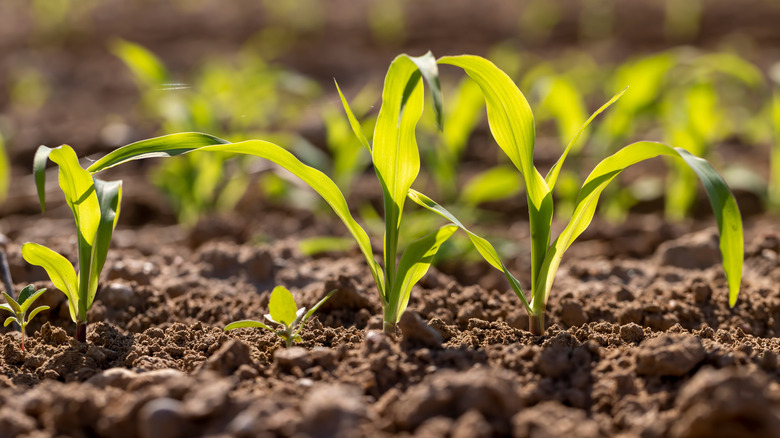
Before you can harvest your own knee-high corn stalks, you'll have to take a few specific measures to ensure a successful yield. Your main concerns should be sun exposure, soil, and temperature. Since sweet corn is such a plentiful crop within the United States, you should have no trouble finding seeds that are specifically suited to thrive within your region. Seasoned farmers recommend planting corn in nitrogen-rich soil with roughly 8 to 10 hours of daily sunlight, so be sure to avoid any shady areas, and till with plenty of fresh compost.
Once you've got your seeds and you've found the perfect space for your sweet corn, be sure to plant in 1-inch deep rows roughly 3 feet apart. Each seed should have somewhere from 8 to 12 inches to spread out, in order to avoid any overcrowding. Since sweet corn is a wind-pollinated crop, it's usually best to plant multiple side-by-side rows to ensure a healthy yield. Obviously, this will vary based on your available garden space, though many agriculturalists recommend planting at least 4 rows in total. Most corn crops require a soil temp of 60-90 degrees Fahrenheit, so it's best to plant in late spring (such as May or June), at least a few weeks after the last frost of the year.
Lastly, avoid planting your corn close to other veggies and fruits that don't make good companion plants. For instance, it's a terrible idea to plant tomatoes next to your corn.
How to make the most of your sweet corn harvest
Now that your sweet corn has been seeded, there are only a few steps required to make the most of your harvest. Be sure to water roughly 1 inch per week, while routinely weeding the area immediately surrounding your stalks. Depending on your rainfall and soil density, you may need to adjust the amount of water you use, or place a bit of organic mulch around the base of the plants to retain natural moisture.
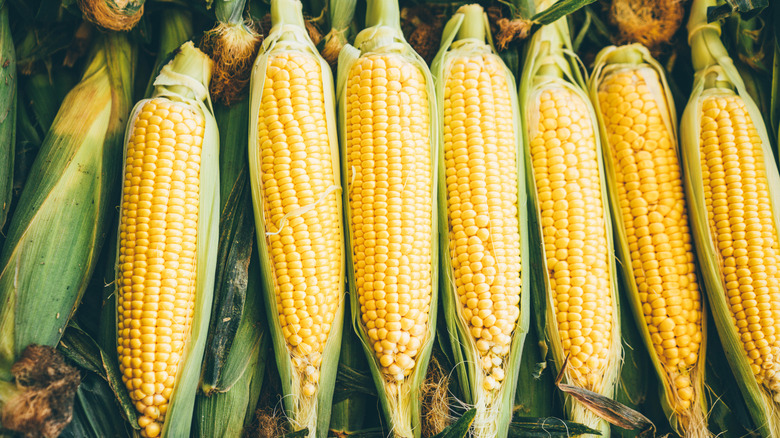
Corn traditionally takes 75 to 85 days to mature, and is best picked when the silks are dry and brown. This generally occurs about 20 days after the silks first appear. If you need any extra confirmation that your crops are ready for the grill, try shucking one and puncturing a few kernels. If they're plump and offer a satisfying snap, that should be all the confirmation you need to gather some friends, family, and neighbors, and kick off an impromptu barbecue where the side dish steals the show.