

Unique Species To Look For On Your Next High-Altitude Adventure
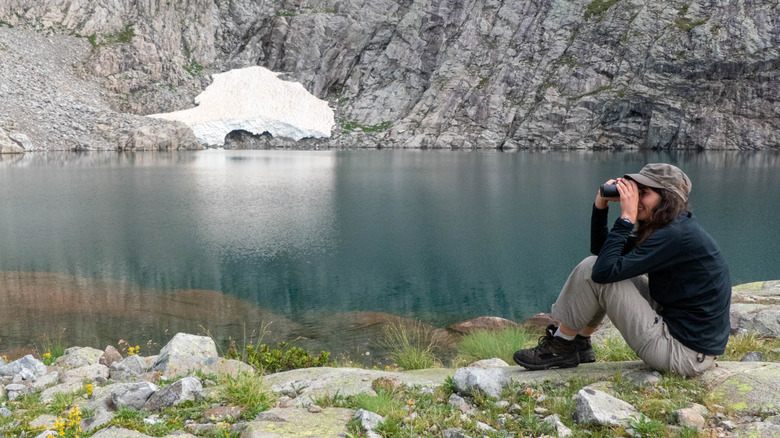
America's highest mountains offer spectacular views, stunning alpine lakes, and unique rocky habitat, making them a popular destination to visit for those who love watching wildlife. While you are unlikely to spot elusive alpine predators like lynx and wolverine on your next high altitude adventure, you do have a good chance of getting close to several charismatic species that live only amongst the United States' highest peaks. Head to the tops of the Rockies, the Sierra Nevada, and the Cascades to find marmots, pika, ptarmigans, mountain goats, and bighorn sheep, all unique species that thrive in alpine environments characterized by short summers and harsh, long winters. Stay safe on your high mountain adventures, and don't be surprised if you get to enjoy a close encounter with one of these distinctive denizens of America's mountaintops.
Spy a fat marmot ambling along alpine slopes
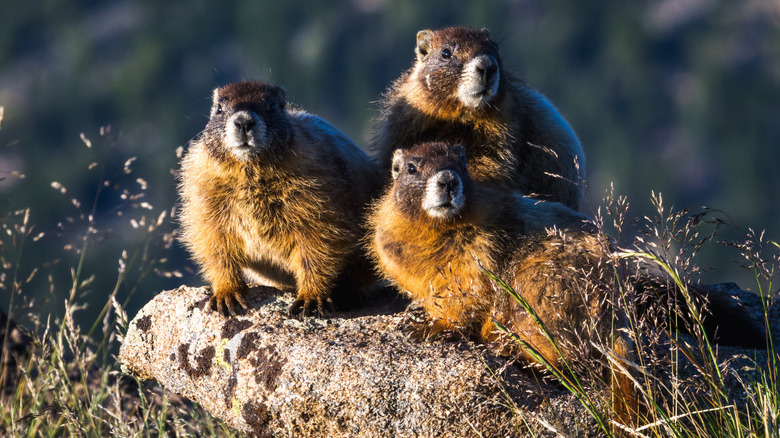
When hiking at high altitude, you may be able to get quite close to these chubby rodents who look like a cross between a groundhog and a beaver, and conduct their business relatively unbothered by human visitors in popular hiking areas. There are several species of marmots in the western mountain ranges of the U.S., the most ubiquitous being the yellow-bellied marmot (Marmota flaviventris) of the Rocky Mountains and Sierra Nevada, and the hoary marmot (Marmota caligata) of the Cascade range and talus slopes of Alaska's high peaks. A sub-species only found in the Olympic Mountains of Washington is the Olympic marmot (Marmota olympus), characterized by its long, bushy tail. Flourishing in colonies of up to 40 family members, you'll find these cute, gregarious critters with cheeks full of grass and moss during summer months as they put on the pounds for a long winter hibernation.
Watch an American pika scurry amongst the rocks
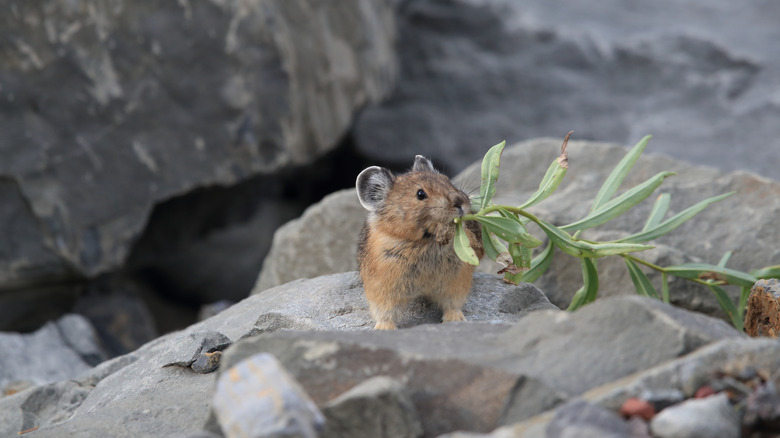
Occupying some of the same habitat as the marmot, the diminutive American pika (Ochotona princeps) will entertain you with its frenetic rock scrambles and piercing whistle among boulder fields and talus slopes at the very highest elevations. This furry little rodent lives exclusively above the treeline in western mountain ranges, and works hard all summer to build a cache of greens that it will dry out and store under the rocks to enjoy through the winter months. You'll often see it running with a mouth stuffed with grass and flowers. While the pika may look a bit like a hamster or rat, it is actually related to rabbits. Look for pika in high altitude rocky areas such as the tundra along Trail Ridge Road of Rocky Mountain National Park or the high altitude lava fields of Southern Utah.
Listen first for camouflaged ptarmigans
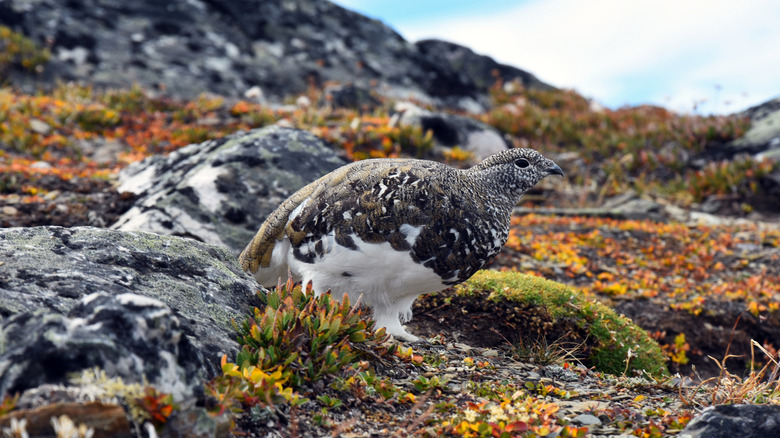
You are far more likely to hear a ptarmigan before you see it nestled among alpine rocks. These fat little grouse can be hard to spot at first due to their incredible camouflage, with mottled brown feathers that perfectly blend into rocky outcrops in the summer, and snow white plumage in the winter. But if you listen closely you might hear the high-pitched bubbling calls of the white-tailed ptarmigan (Lagopus leucurca) among the high slopes of the Colorado Rockies and Washington's Cascade mountains. Their cousins the rock ptarmigan (Lagopus muta) have a uniquely robotic, crackling call that sounds something like "avow." Along with the willow ptarmigan (Lagopus lagopus), both can be found in Alaska's tundra and coastal regions (rock ptarmigans are also the only variety found on the Aleutian Islands). These little grouse have feathered feet in the winter, allowing them to navigate deep snow. In summer, you can get quite close to these birds, which are known for being relatively unafraid of people.
Admire the mighty mountain goat
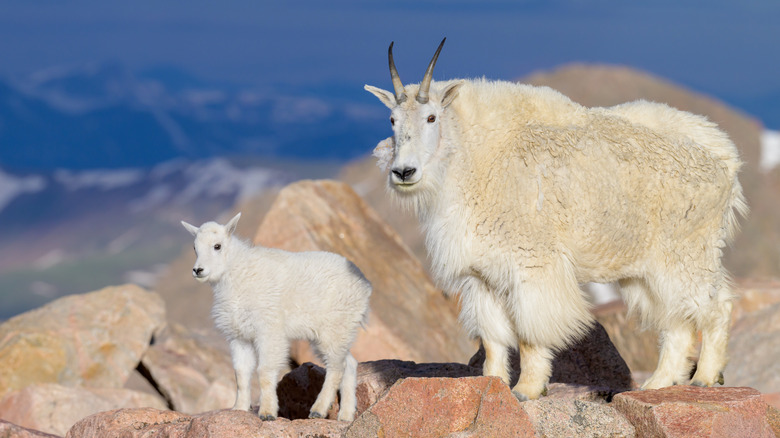
The sure-footed mountain goat (Oreamnos americanus) can only be found indigenously in the high Rocky Mountains of North America, from Southeast Alaska to Montana, with introduced or reintroduced populations around western Canada and the western U.S. These striking white goats with short, glossy black horns can be found on alpine meadows and cliffs in the summer, grazing on grasses and hopping effortlessly from rock to rock. Introduced populations of mountain goats have caused some ecological issues in some western states like Colorado. Due to the damage goats were causing to sensitive alpine ecosystems, these animals were famously removed from Olympic National Park by helicopter in 2020-2022 to be relocated to a more appropriate habitat in the Cascade mountains of Washington. You are almost guaranteed to see mountain goats atop Mt. Blue Sky in Colorado in the summer months, and can they be regularly spotted (sometimes on the road or trail right in front of you) in Glacier National Park.
Get close to Rocky Mountain bighorn sheep
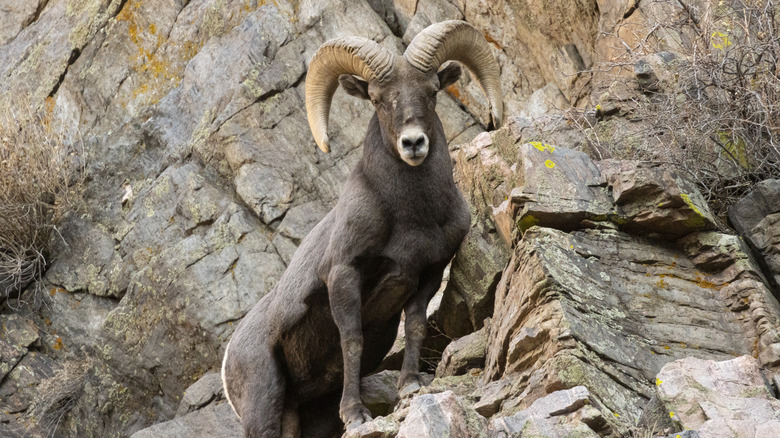
This high altitude sheep, whose males are known for their large, circular horns, are masters of climbing the steepest inclines of multiple mountain ranges of the American west and southwest. Found not only in the Rocky Mountains, the range of the bighorn sheep (Ovis canadensis) includes the Cascades and the Southern Sierra Nevada. Bighorns are champion climbers, balancing on the tiniest rock ledges of impossibly steep slopes. In the fall, males will crash against one another to assert dominance during the rut, producing loud bangs that can be heard up to a mile away.
These large sheep will also venture down from their cliffside domain to browse on grass and even cactus, making them a regular sight in the high deserts of Nevada, New Mexico and Southern California, and along mountain passes and canyons in Colorado. The Waterton Canyon Trail outside of Denver, Colorado is well known for the close encounters hikers have with bighorns. Follow posted guidelines to stay safe on your next wildlife-watching adventure, to avoid disturbing these magnificent animals.