

The Crucial Step You Don't Want To Skip When Starting Seeds
We may receive a commission on purchases made from links.
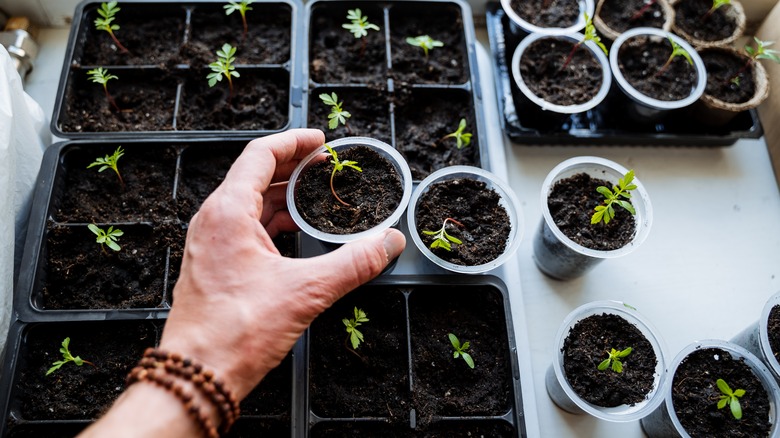
When it comes time to start your garden, there are a couple of options. You can buy seedlings and transplant them or start your plants from seeds. While the first option may seem like a quick fix for filling out your garden, it is also more expensive and, for some gardeners, less satisfying. For those wishing to save some money and glean the gratification that comes from starting your garden from scratch, seeds are the way to go. However, while most common garden plants are easy to grow from seed, there is a crucial step you don't want to skip when starting seeds: ensure you provide them with enough warmth.
When it comes time to start your seeds, knowing how deep to plant seeds of different types is important for success. It is also crucial to avoid garden watering mistakes as your seeds begin to sprout. But, one of the biggest mistakes new gardeners make when starting seeds is not keeping them warm. Warmth is just as critical as moisture and nutrients for germinating warm-weather seeds, as higher temperatures help break down the seed's outer shell. Not keeping seeds sufficiently warm means you run the risk of the seeds not sprouting or taking longer to do so.
For those starting seeds outside, insufficient warmth typically has to do with planting too early — before the threat of a final frost has passed. Failing to keep seeds sufficiently warm when starting them indoors is typically a result of placing seed trays in the wrong location within the house or not providing additional warmth. These and other mistakes related to keeping seeds warm while they germinate can be easily corrected.
How to ensure seeds stay sufficiently warm
It's important to keep seeds warm throughout the germination process, but unfortunately, the exact temperature varies for each type of plant. Therefore, you should consult the back of the seed packet for the proper temperature range for seed germination. Most warm season garden plants do best between 70 to 80 degrees Fahrenheit. Keep in mind, this temperature is the soil temperature, not the air temperature. Those two numbers can be significantly different. It's a good idea to use a device like the Urban Worm Soil Thermometer to monitor the soil temperature.
If you are direct sowing seeds outdoors, be aware of your hardiness zone as well as your average temperatures. In the extreme southern portions of the United States, soil temps will typically be warm enough in early spring. Further north, it's not only necessary to wait until the final frost has passed but until the soil has warmed following the last frost. Sowing seeds during an unseasonably warm stretch in late winter or early spring may backfire if a late-season chill comes through.
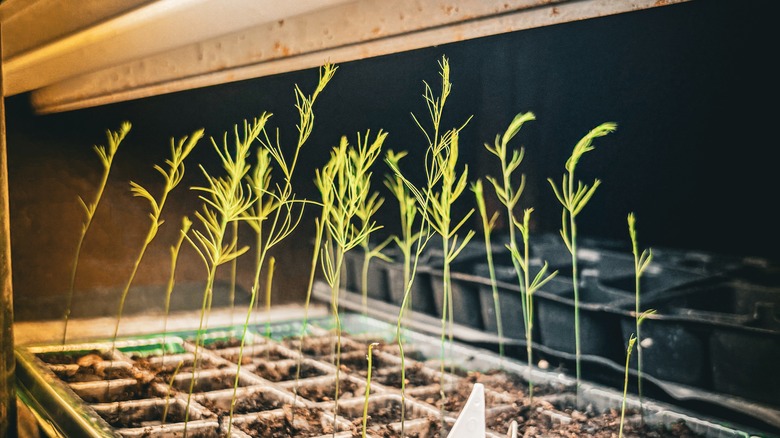
When sowing seeds indoors, it is important to maintain seeds at these same temperature ranges. Given that the average American home is kept at a room temperature ranging from 68 to 74 degrees Fahrenheit, this may not be as easy as it seems. If you keep your house on the lower end of that range, take measures to ensure your seed trays remain warm. Setting them in a sunny spot is one way to accomplish this. Utilizing a warm grow light is another possibility, as is using a VivoSun Waterproof Seedling Heat Mat or similar product.