

The Hot Weather-Loving Flower That'll Have Hummingbirds Flocking To Your Yard
We may receive a commission on purchases made from links.
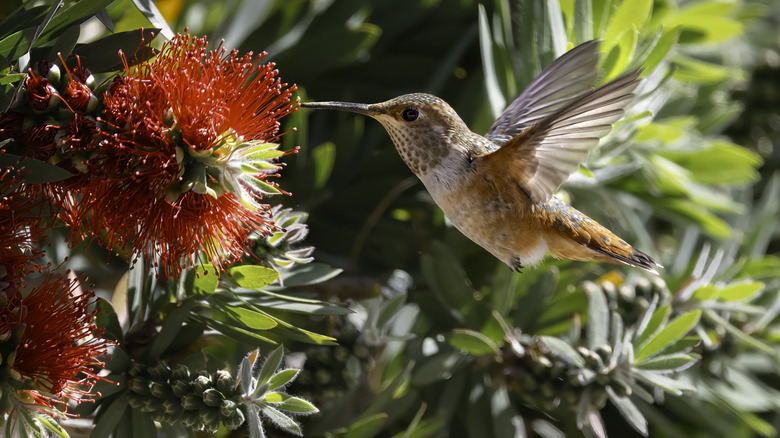
Hummingbirds can't make sense of written language, but they can read the word-free road signs that Mother Nature provides. One of them is red flowers. These mean "lots of nectar ahead." That's why adding red to your garden beckons hummingbirds. Hummers also favor certain species of flowers. Of the many stunning plants that attract hummingbirds, pentas (Pentas lanceolata) is one of their favorites. If your yard has pentas plants with red flowers, these little birds will choose them over most other options in the vicinity. These easy-care flowers also draw butterflies, which love their nectar almost as much as hummingbirds do.
Also known as Egyptian star flower or star cluster, pentas is a perennial in USDA hardiness zones 10 and 11, which cover the southern edge of California, the lower third of Florida, and most of Hawaii. It can be grown as an annual or a houseplant in climates that aren't as hot. Pentas likes a variety of soil textures, including sand and loam. It will even tolerate clay as long as excess water drains efficiently. Pentas also prefers acidic planting sites, which makes it a good companion for other plants that love a pH level below 6.0. Some shrubs that fit this description and thrive in its growing zones include cape jasmine (Gardenia jasminoides) and bigleaf hydrangea (Hydrangea macrophylla).
Pentas grows in full sun or partial shade, even when temperatures are high and water is scarce. Each specimen typically reaches a height and width of 1 to 2 feet. With fast-growing foliage that stays green throughout the year, pentas add beauty to a landscape when other plants put on drab winter outfits.
How to attract more hummingbirds with pentas plants
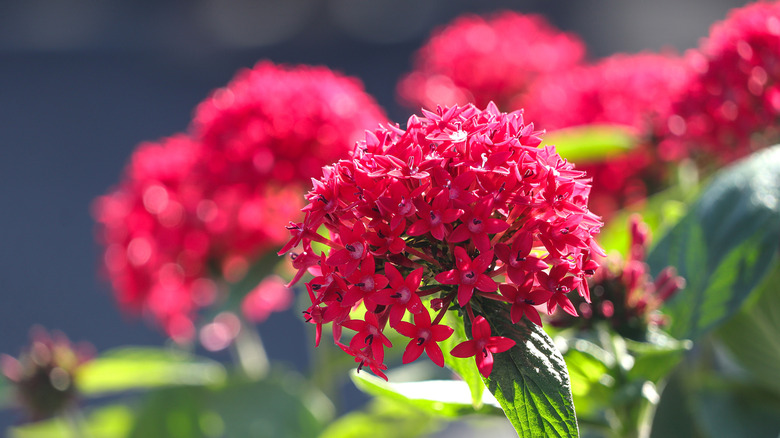
Though pentas plants are natural hummingbird magnets, there are a few things you can do to boost their appeal. First, choose the right color. Pentas blossoms tend to come in red, white, yellow, pink, and purple. Red is the best for attracting hummers, but pink, yellow, and other bright hues also pique the interest of these dainty birds. Place an overripe banana in your garden to draw even more hummingbirds. It will lure them with a protein-packed snack: fruit flies.
Hummingbirds are also drawn to pentas flowers' tube-like shapes, which make nectar sipping easy, so make sure you're encouraging your plants to blossom as much as possible. Though they're content with just a few hours of daily direct sunlight, give them at least six to facilitate flowering. Also grow these plants in border plantings and other spots where they can spread out a bit. Though pentas plants can form a lovely hedge, they don't make as many blossoms when planted in this way. That's because placing the plants so close together can slow the formation of new foliage, which serves as the foundation for flowers.
You can also help your pentas plants bloom with abandon by keeping pests at bay. Spider mites and aphids are the main bugs that bother pentas. Both can weaken the plants enough that flowering may suffer. Spraying the foliage with a hose can blast away these insects, as well as the webs that spider mites build. If this doesn't take care of the problem, apply a product such as Garden Safe insecticidal soap.