

The Low-Maintenance Plant That'll Make A Great Addition To Your Succulent Garden
Some of the fun in growing a succulent garden comes from pondering what to plant in it next. From prickly cacti to cascading stems strung full of plump leaves, the succulent world offers a seemingly endless variety of options to explore when picking the next plant candidate. One particular succulent works well in pots and hanging baskets, is easy to grow from cuttings, and sometimes shows off nectar-rich pink to red flowers. Burro's tail, or Sedum morganianum, produces leaf-covered stems that eventually cascade over the edges of pots, retaining walls, or hanging baskets as the plant grows. It even tolerates rocky soil and dry conditions and has very few pest problems, making it a fuss-free plant for beginning gardeners as well.
In some warm climates, burro's tail could even be used as part of a stunning plant wall for your backyard. If you like the succulent plant wall idea but live in a region that gets cold in winter, simply make the wall so small pots fit in it and bring the pots indoors as temperatures drop.
Why burro's tail is a great plant for a succulent garden
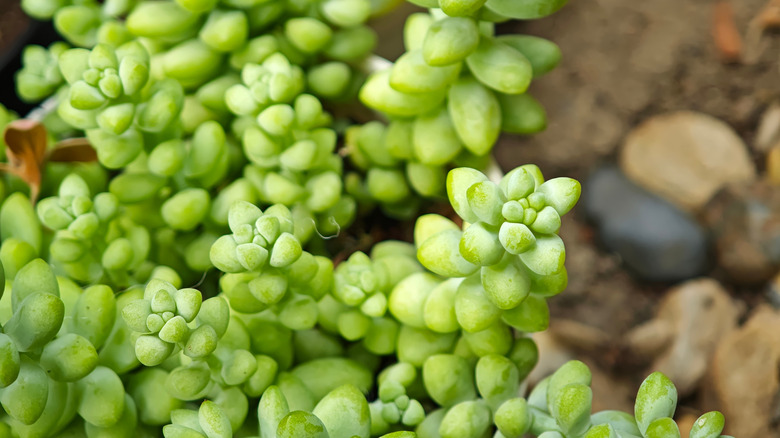
Though burro's tail is native to Mexico and the Dominican Republic, it tolerates temperatures as low as 40 degrees Fahrenheit. This makes it a nice indoor/outdoor option for a hanging basket or container that's brought inside once temperatures drop in cooler climates. Burro's tail prefers well-drained soil and lots of sunlight. Overwatering could cause root rot. The plant practically tells you whether it has too little, too much, or just enough water; too little water and its leaves shrivel, too much and the plant turns yellow and wilts. Just the right amount of water produces plump yet firm blue-green leaves.
If you plan to take burro's tail outside once the weather warms, the plant should be slowly introduced to brighter outdoor conditions or it could sunburn. In summer, a mature burro's tail sometimes produces pink or red flower clusters that'll attract bees to your garden, making it a nice pollinator-friendly addition to your succulent garden. A hanging basket or container away from pet and human activity is ideal for burro's tail, since its brittle leaf-covered stems are easily broken. Breakage does have an upside, however; it makes it easy to propagate.
Grow a new burro's tail from a broken stem by first stripping the leaves from the lower portions of the stem, then letting the stem dry out for a couple days or until the broken end has calloused over. This same drying-out method works for individual leaves that have broken off. Place the healed plant piece so the bottom end is slightly buried in a well-drained soil, such as a potting mix designed for succulents. Keep the soil moist but not overly wet. It may take several weeks to even a few months for ample roots to develop. The new burro's tail plants are ready to repot, if desired, once they develop a few leaves of their own.