

Make Starting Seeds Easier With The Help Of A Poolside Staple
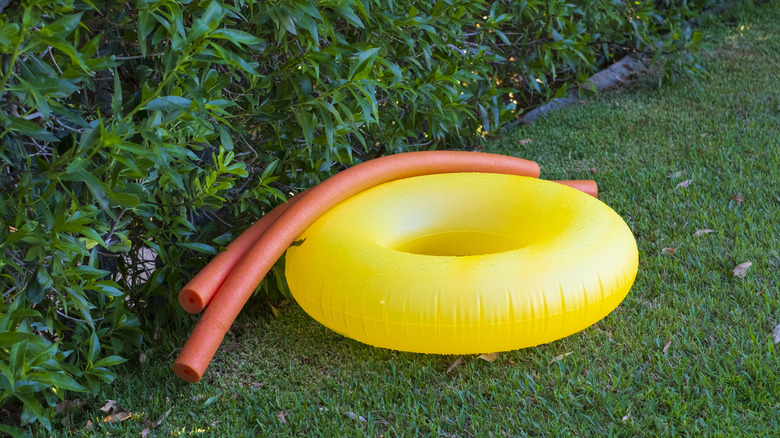
Growing your own food is no longer reserved for folks with acreage to spare. Cultivating vegetables within a restricted space, or square foot gardening, is not only possible, but it's relatively simple and inexpensive to get started. Hydroponics is a similar space-saving gardening solution that has become more popular recently. It saves on soil, water, space, and pesticides. In addition, this sustainable method of growing plants is more efficient and can produce a harvest more quickly compared to using soil. The ubiquitous pool noodle makes hydroponics even more accessible and economical. A round cut from a pool noodle supports seedlings in the hydroponic planting hole, allowing the roots to hang in nutrient solution while they grow.
Instead of soil, you "plant" your seedlings in a solution of nutrients, such as nitrogen, phosphorus, and potassium. Your plant will also require aeration and water circulation to stay healthy. Plus, pool noodles are cost-effective, easy to cut and shape, and reusable.
However, pool noodles are no substitute for substrate, such as the more established rockwool. In other words, they don't hold water or nutrients. Rather, pool noodles support seedlings since there is no soil to hold them. But not just any noodle will do. Cheap PVC noodles contain carcinogens that can leach into your plants. Noodles made from EVA are safer for your plants than those made from PVC.
How to hack your pool noodle for hydroponics
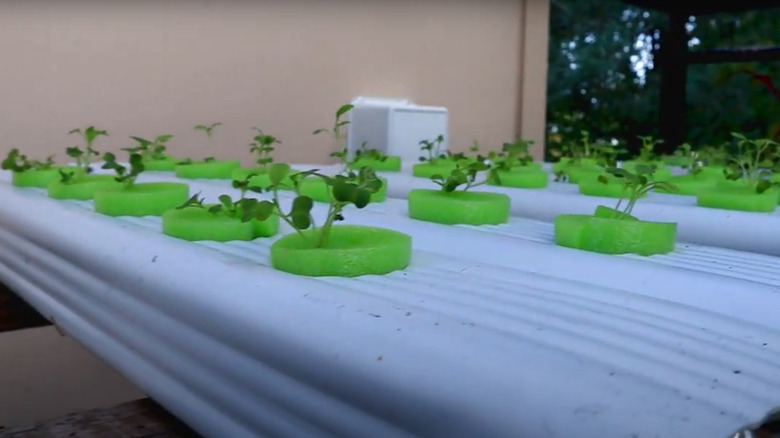
In terms of simple, money-saving hacks, this how-to is right up there with using a pool noodle to keep your plants cool. To craft your hydroponic holder, make sure you have an EVC pool noodle long enough to yield all the seedling holders you need. The average length of a pool noodle is four to five feet. You need only one-inch-long sections for each holder, so you should be able to get plenty from only one noodle. For slicing your pool noodle into sections, a serrated knife works wonders.
Some pool noodles have a center hole that's too large to properly support your seedling. If that's the case for you, use a pair of scissors to slice away a small piece, creating a "C" shape. In the center of your C, insert your seedling and the small piece you scissored. Pinch the C around its contents and gently wedge it into your hydroponic hole so the roots dangle in the solution. Now that's using your noodle.