

What To Know Before Using Bleach To Control Weeds On Your Grass
We may receive a commission on purchases made from links.
Weeds are the bane of lawncare lovers. Countless hours and dollars are spent trying to eradicate them from lawns everywhere. While some mowing techniques can control weeds, there are some spots on the lawn where mowers just can't reach. Although hand pulling is effective, it is also time consuming and, at times, strenuous. As a result, many turn to some sort of weed-killer, including various DIY versions. One of those involves using bleach. But, you might want to think twice before grabbing a bottle and attacking your lawn. Here's what you need to know before using bleach to control weeds on your grass.
For starters, bleach will indeed kill weeds. In fact, it will kill virtually any plants it contacts and eliminate them completely, including the roots. This means you may unintentionally kill grass, along with desirable plants and flowers you have in your yard. Additionally, much like using salt to kill weeds, bleach has some potentially dire long-term consequences for your lawn. The main cause of this is the elevated pH level of bleach, which in turn affects the soil chemistry. It also takes bleach a long time to break down. When it finally does, the primary remnant is actually salt. The altered soil chemistry, along with the residual salt can make portions of your yard a dead zone for quite some time.
During the time bleach is still active, it can be spread through rain or lawn watering, damaging a greater area of your yard than intended. It can also be harmful to solid materials in your yard, such as pavers, concrete, metal, and wood, causing bleach stains, rust, and corrosion.
Bleach-free ways to kill weeds in your yard
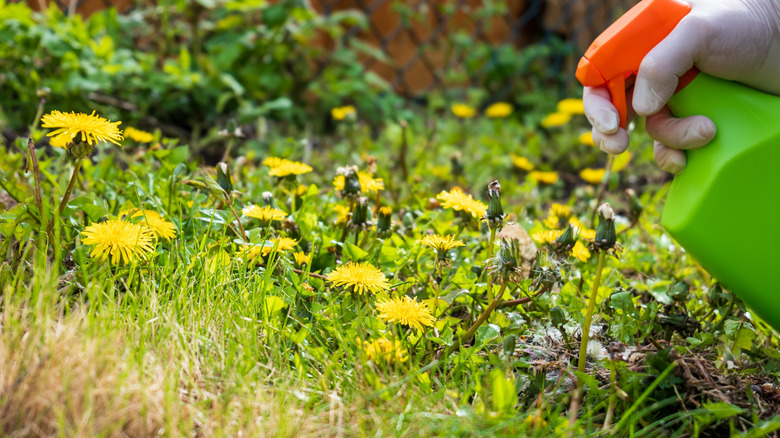
There are ways you can create your own DIY weed killer without exposing your yard to the harsh impacts of bleach. The vast majority of the DIY weed killer recipes, including Martha Stewart's 3-ingredient weed killer, use another common household product — vinegar. A number of those mixes also call for salt. However, it is not necessary to risk the potential damage from those sodium-laden crystals to kill weeds. Mixing vinegar with baking soda, lemon juice, or both will give you the desired results without the potential for disastrous results. It's also a good idea to add a few drops of dish soap to help the mix stick to the plants. If you don't feel like mixing up your own batch, you can always buy a vinegar-based weed killer like Green Gobbler 20% Vinegar Weed & Grass Killer.
Rubbing alcohol is another common household item that can be used to vanquish weeds from your yard. The best way to use rubbing alcohol as a weed killer is to mix a couple tablespoons of 70% isopropyl alcohol with a quart of water in a spritzer bottle. Spraying the leaves of weeds will allow this contact killer to do its thing, which is essentially drying out the impacted plants. Those wanting to go absolutely 100% natural in their weed killing methods can utilize one simple ingredient — water. Although water is the very element that allows grass and weeds to grow, when brought to a boil and poured directly on weeds, this life giver turns into a death bearer. Although it isn't practical to use boiling water to attack a massive weed infestation, it is very useful when attempting to kill weeds along edges and cracks in sidewalks and driveways.