

Add A Little Whimsy To Your Garden By Planting This Colorful Flower
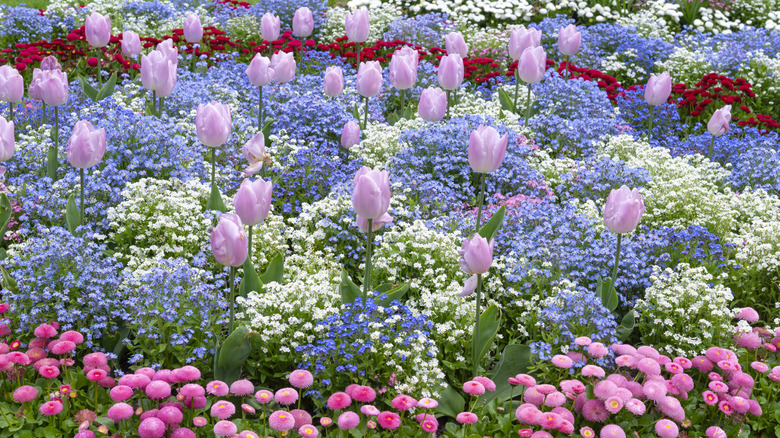
With its circle of layered white petals surrounding a bright yellow floret, the diminutive English daisy (Bellis perennis) is a classic addition to garden flower beds. Only reaching a height of three to six inches, these little flowers are easy-growing pops of color that are perfect fill-ins for small spaces and garden edges, and they do quite well in containers, too. Their white petals are sometimes tinged with pink or purple, bringing even more charm. Because they are low-growing and love well-drained soil, these daisies bring long-lasting color even to grass alternatives for a no-mow garden, such as a rock garden. The English daisy is also a pollinator-friendly flower, attracting bees and butterflies all summer long.
In growing zones 4-8, this perennial daisy shows its blooms from spring through early fall, and is able to return the following year in milder climates. It loves the sun but appreciates a little shade in hotter areas, and will fade fast in the heat of summer. Moist soils are key to keeping the blooms going throughout the growing season. This hardy little flower is considered deer resistant, and isn't particularly vulnerable to pests or disease.
Considerations to keep in mind before planting English daisies
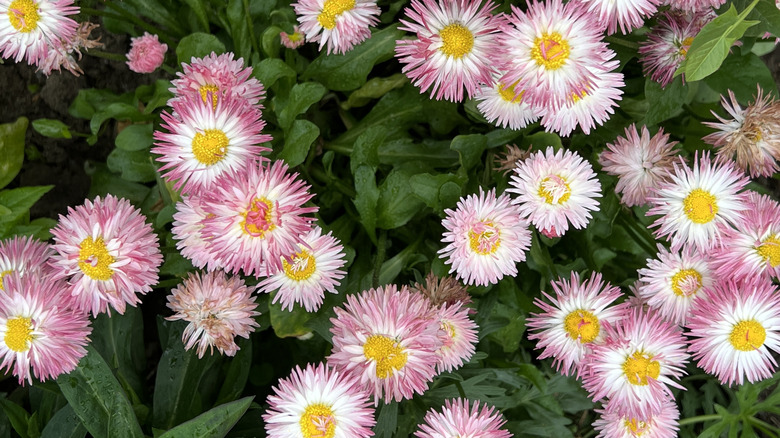
The English daisy is not native to the United States, but heralds from Europe. Like some invasive species you might regret planting in your yard, English daisies can easily spread beyond the garden patch, escaping into your lawn. While you might enjoy a sprinkle of white flowers amongst your green turf, these daisies can be difficult to get rid of once established in grass. In fact, some consider this charming little flower a weed. Some counties, particularly along the West Coast, even include English daisies on their invasive plant lists, so you'll want to consult with your local invasive species department before welcoming these daisies into your garden.
If the English daisy isn't appropriate for your garden but you want that daisy charm, consider native alternatives. On the West Coast, the Pacific or California aster (Symphyotrichum chilense) has the same look as an English daisy and is a top choice in ecological restoration and native gardens. It enjoys similar growing conditions to the English daisy, but it grows significantly taller, at one to four feet. Its cultivar cousin, the Point Saint George aster, is lower-growing and often used as a native groundcover along the West Coast. In the Southwest, the Blackfoot or rock daisy (Melampodium leucanthum) has more refined white petals and a compact, bushy shape – also excellent for pots or rock gardens with plenty of sun. The Eastern daisy fleabane (Erigeron annuus) is a leggier flowering annual native to the eastern half of the U.S. with a fringe of narrow, delicate white petals around its yellow centers.