

What To Do When Caught In A Flash Flood While Hiking Or Camping
We may receive a commission on purchases made from links.
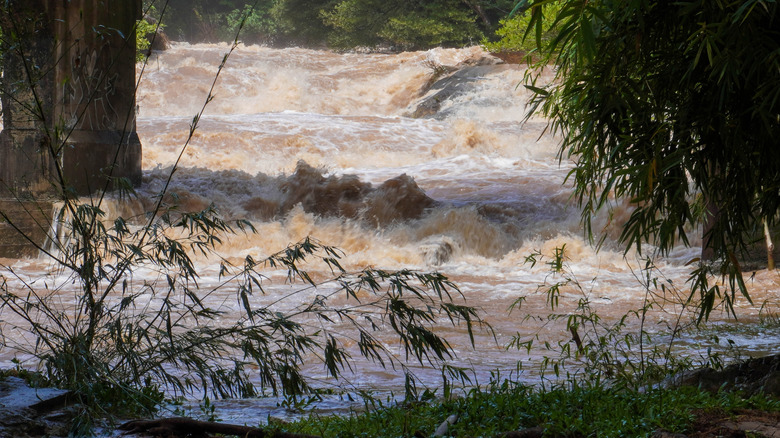
A common danger for hikers, backpackers, and campers is flash flooding, particularly during spring and summer. These rapidly developing, violent events can easily become problematic for adventurers and, in some cases, deadly. Flash flooding is why this Grand Canyon trail is among the most dangerous in the U.S. and also why some trails in Zion National Park frequently close. This does not mean you should avoid hiking these areas. Instead, you should be aware of how to stay safe during flash flooding. The key to surviving should you be caught in a flash flood is being aware, prepared, and knowing what to do.
Flash flood emergency safety actually begins before you even hit the trail. Prior to any hike, make sure you know the topography of the area and be sure to check the forecast. Use reference maps to determine where elevated areas are, as well as any rivers and streams that may flood. This includes dry river and stream beds, which are prone to flash flooding and can quickly become danger zones. Use this information to plan not just your route and potential camping spot, but also escape routes from various points on the trail.
Check the forecast frequently in the time leading up to and during the trip. Any forecast of rain or flooding, including flash flood watches and warnings, should be heeded. The safest bet to avoid problems is to stay well away from rivers, streams, and dry river and stream beds if rain is expected. Regardless of the forecast, it's prudent to avoid pitching your tent within the confines of a river or stream bed. Often, these water bodies rise — and dry beds fill — as a result of rainfall far upstream of your location.
Pay attention to the signs before flooding starts
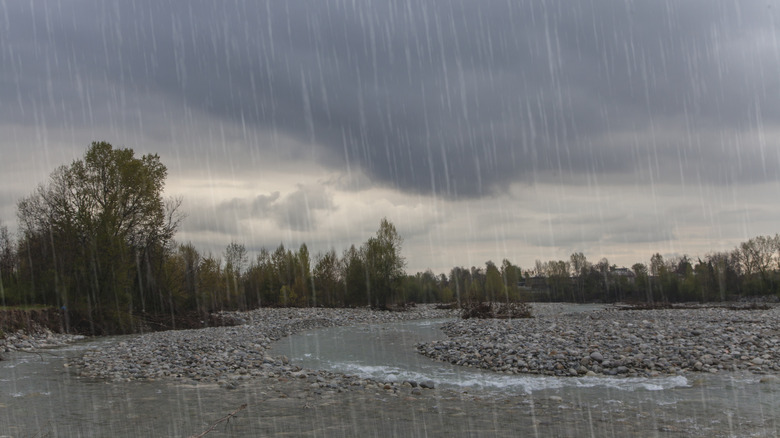
Flash floods can happen anywhere in the U.S. The most dramatic — and dangerous — flash floods typically take place in areas with elevation changes, as the water will rush to fill the low-lying areas. That's why it is critically important to monitor the conditions when you are in such areas, as a flash flood can turn a calm scenario into chaos literally within minutes. However, you can remain safe if you know the signs of an approaching flood event.
If you are near an active stream or river, keep an eye on the water. Should you see the conditions change, that's your cue to leave the area. Some of the signs to look for are rapidly rising water levels, clear water beginning to turn murky, and the sound of rushing water increasing. Similarly, if you are in a low lying area or dry riverbed, there are danger signs to be aware of, such as the sudden appearance of water in the dry bed and a loud roar, which can indicate water rapidly filling the area. Keep in mind that this type of flooding can be the result of rainfall further away that you may not even be aware of. However, paying attention to these tell-tale signs can help you get an early notice that a dangerous flow is on the way.
Find higher ground and wait out the flooding

If you witness any of the signs of approaching flood waters, don't waste time — move to higher ground immediately. This is where advanced planning can help, as knowing how to quickly get to higher elevation can be a literal lifesaver. If the water is rising, do not attempt to re-cross a river or stream in order to get to your original path. You should also avoid climbing onto rocks or large boulders in the assumption these will be safe. Flash flood waters can rise surprisingly high and you may end up being forced to vacate these spots in even more dangerous conditions or be trapped for an elongated period of time. Nor should you attempt to take shelter on a bridge or walkway above the river, as these can possibly be overcome and/or swept away.
Should you be surrounded by water and have no choice but to cross it, unbuckle and loosen the straps on your back before crossing. This is necessary so that you can easily ditch the pack should you be swept downstream and/or are struggling in the water. Additionally, do not waste time trying to gather up or save any gear you may have in the area. The first priority is to save yourself — you can always attempt to salvage your gear once the threat has passed.
After getting away from the water, move as high as you possibly can — do not assume a few feet will provide you a safe haven. Instead, keep hiking to higher elevation until you are well clear of the flood zone. Once in a safety zone, stay there until the threat passes. Assess members of your party for any injuries and summon help with a Garmin inReach Mini 2 or similar device if necessary.