

Create The Perfect No-Mow Lawn Using This Stunning Gardening Method
We may receive a commission on purchases made from links.
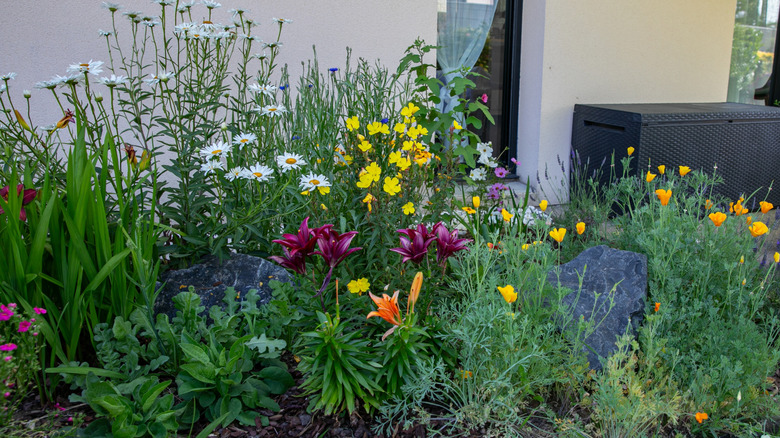
For a growing number of Americans, mowing and keeping up with a lush green lawn just is no longer worth the time and money. Given the ever-increasing number of areas facing more frequent water restrictions, it is also not possible to maintain a traditional lawn even if they wish to do so. However, this doesn't mean you have to go full-on xeriscape with your yard. In fact, there are a variety of alternatives for creating a no-mow yard. One such option is to convert your lawn into a wildflower meadow, a stunning gardening method that can create the perfect low-maintenance lawn.
There are a variety of ways to turn your yard into a no-mow wildflower meadow. The first step is settling on a plan as to which type of plants and flowers you wish to grow. Some who make meadows in their lawns choose to use purely native vegetation, which requires less upkeep. Others choose to accentuate natives with a variety of other ornamental grasses, plants, and flowers. However, most experts agree that utilizing plants and flowers that are native to the area will result in more sustainability given your local climate conditions and take much less time to maintain once established.
Regardless of the plants you intend to utilize, you need to plan on how many you will need, whether you will be planting plugs, seeding with bulk seeds such as the Burpee wildflower perennial mix, or doing a combination. You will also need to plan the layout of the meadow, although many choose the chaos gardening method, which can result in a natural look when planting compatible, native flowers and plants. You will also need to prepare the area by removing weeds, as well as incompatible or non-native plants before seeding your meadow.
Advantages and disadvantages of no-mow meadows

Before deciding to turn your yard into a no-mow meadow, you should be aware it comes with both advantages and disadvantages. Perhaps the biggest drawback is it takes time to fully convert your lawn into a meadow. Depending on the type of vegetation and your geographic area, it can take a few years to see the final product as you imagine. There will, however, be incremental progress along the way. Meadows also limit your ability to use your lawn for some traditional backyard activities. However, if you don't need a patch of grass for playing catch or similar activities, the impact of this is likely to be negligible. You also have the option of retaining a small patch of turf for such uses.
On the other hand, the advantages of a meadow are many. For starters, it greatly amplifies the ecological diversity of your backyard space. The presence of various plants and flowers will have hummingbirds flocking to your yard, along with a host of other birds, insects, and animals. Meadows will also help stabilize and enrich the soil and require minimum maintenance. However, it is important to note there is some maintenance, particularly pulling the occasional weeds. Depending on the plants in your meadow, you may still need to mow, although mowing meadows for maintenance typically happens once a year — spring or late winter.
One final consideration before turning your lawn into a meadow is to make sure it is allowed where you live. A number of cities and neighborhoods have restrictions, ordinances, or regulations mandating what is and isn't acceptable in lawns.