

The Easy-To-Grow Annual That Adds Interest To Any Flower Bed
We may receive a commission on purchases made from links.
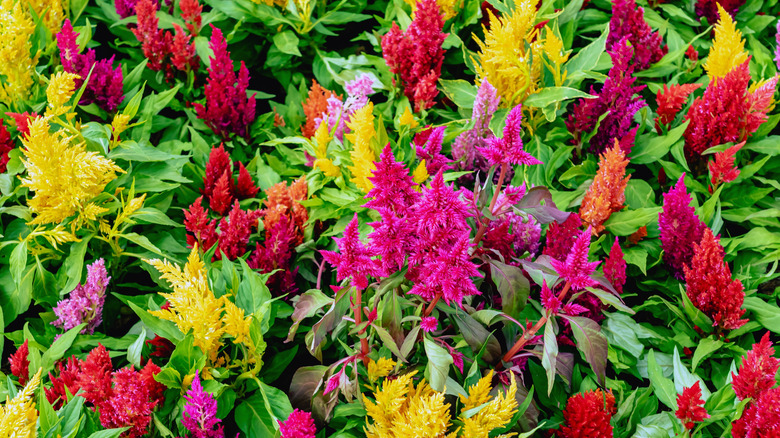
Want a smoke-free ode to a perfectly built campfire in your own backyard? Fill a flower bed with plume celosia (Celosia argentea), a tropical herb that's related to amaranth and indigenous to Africa. Its flower spikes rise up like flames and come in fiery hues such as red, orange, yellow, and pink. In other words, this easy-to-grow plant offers a simple way to add vibrancy to a landscape. To thrive in your yard, plume celosia needs at least 6 hours of daily direct sunshine and sandy or loamy soil. It's typically planted as an annual, but it can also be grown as a perennial in USDA hardiness zones 10 and 11.
Bright colors aren't the only feature that make plume celosia a visual treat. Its feathery flower spikes are often half a foot tall, adding an eye-catching vertical dimension to gardens teeming with low-growing ground covers and compact shrubs. In fact, this plant is so memorable that it has earned more than a dozen nicknames, including plumeflower, red fox, Prince of Wales feather, and fairy fountain. Plume celosia is also incredibly versatile, making a statement in hanging baskets, patio planters, and border plantings. It's a terrific choice for pollinator gardens since it attracts bees and butterflies. To sweeten the deal, plume celosia boasts a lengthy blooming period. If you deadhead the plants, you'll get lots of flowers from the end of spring through the first frosty day of autumn.
How to grow happy, healthy plume celosia
In general, plume celosia is low maintenance if you keep its needs in mind. When deciding where to install it, make sure there's enough room for a mature specimen that's up to a foot wide and a foot and a half tall. There are a few moisture-related preferences to note as well. Though plume celosia can tolerate short dry spells, it doesn't like soggy conditions. To prevent overhydration, choose a planting site that drains effectively and water your plume celosia when the uppermost inch of its soil feels dry. If water pools around the roots, the plant is likely to rot, which may lead to its demise. Mixing compost into your plume celosia's soil is one way to address less-than-ideal drainage. Flower rot can also be an issue. Plants that are too close together are most susceptible to this problem.
Crowding also increases the chances that your plume celosia will develop a pest infestation. The insects that bother this species the most are aphids and spider mites. Aphids weaken plants by extracting their sap, whereas spider mites consume the chlorophyll they need for photosynthesis. Both can be wiped out with neem oil or insecticidal soap. Natria neem oil spray for plants and GardenSafe ready-to-use insecticidal soap are two solid options. If slugs or deer visit your yard, they may take an interest in your plume celosia, too. You can catch garden slugs with beer traps or simply pluck them off of the plants as needed. Deer are a little harder to outsmart. One strategy involves growing a deer-repelling flower such as barrenwort around plume celosia and other vulnerable plants.