

Reuse A Garden Sieve To Build The Perfect Home For Succulent Plants
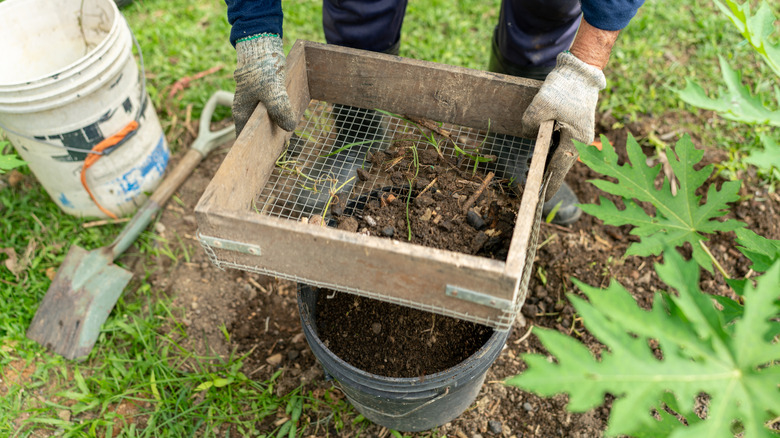
Among the many gardening tools you need to start and manage a successful veggie or flower patch, a garden sieve can be useful for sifting stones and debris from your soil. These round or square frames backed with wire mesh are also used to sort through compost before adding it to a garden bed. While these handy sieves can last for many seasons, they will eventually break down. Instead of throwing a tired old sieve out, you can repurpose it as a unique piece of garden decor. Simply add soil, peat moss, succulents, and a bit of chicken wire to create living art for your outdoor space.
Old metal or wooden sieves will work best for this project, and if you don't have any in your own collection, you can often find them at antique stores or on resale sites like eBay. To transform a sieve into a hanging succulent garden, simply attach chicken wire to the front, bottom half of the sieve using enough wire to fold over the edges. (You may need to add some wire mesh to the back of the frame as well if it has fallen off.) You can attach the wire to the frame with wire fence staples if your sieve is wood, or with cable ties if it's a metal frame. Fill the bottom half with a nest of peat moss topped with well-draining soil, and plant the succulents of your choice. Hang the sieve on a patio wall, pillar or fence post for a distinctive focal point in your garden.
What succulents to choose for your hanging sieve garden
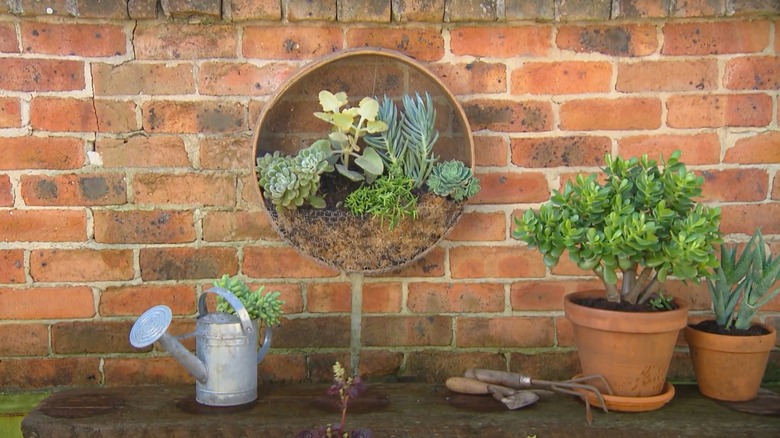
Many types of outdoor succulents will thrive in this sieve set-up, as the wire mesh will ensure maximum soil drainage for these arid-loving plants. Group succulents together in your sieve that need similar sunlight requirements. For example, you can group small cactus plants together that enjoy all-day sun, like rainbow cactus (Echinocereus rigidissimus) and pink-blooming pincushion (Mammillaria), and hang your sieve in a south-facing spot. If you live in a frosty zone, you'll need to protect your succulent sieve from cold temperatures, or choose hardy succulents like hen-and-chicks (Sempervivum) that can handle some freezing. There are several species of hanging and trailing succulents like string-of-pearls (Senecio rowleyanus) or donkey's tail (Sedum morganianum) that would look lovely spilling over the chicken wire facade of your sieve garden.
In caring for your succulent-packed sieve over time, be sure to avoid the gardening mistake of overwatering, which will kill succulents. If you live in a rainy area, hang your sieve in a spot shielded from downpours, but that still gets plenty of light. If you are intimidated by succulent care and you live in a warm growing zone, consider planting aloe vera in your sieve, which is a fuss-free plant even a gardening beginner can grow. Whatever you choose, your repurposed garden sieve will be sure to add distinctive style to your outside space.