

The Low-Maintenance Bush That's The Perfect Addition To Your Front Yard
We may receive a commission on purchases made from links.
Easy-care landscaping is a smart choice for novice gardeners seeking fuss-free plants, parents juggling work and childcare, and others who might not have much time for yard upkeep. Incorporating low-maintenance plants into your front yard is a great starting point since it's likely to boost your home's curb appeal. Caper bushes (Capparis spinosa) can enhance this part of your landscape if you live in their preferred growing range, USDA hardiness zones 8 through 10. They will tolerate stony soil, inconsistent watering, and high temperatures as long as they get at least 6 hours of direct sunlight each day. These adaptable shrubs will happily grow in spots other plants won't consider, too, including spaces between rocks and sloped areas with uneven terrain. Plus, caper bushes are rarely bothered by hungry visitors such as rabbits and deer. This means you won't have to spend time or money replacing defoliated plants.
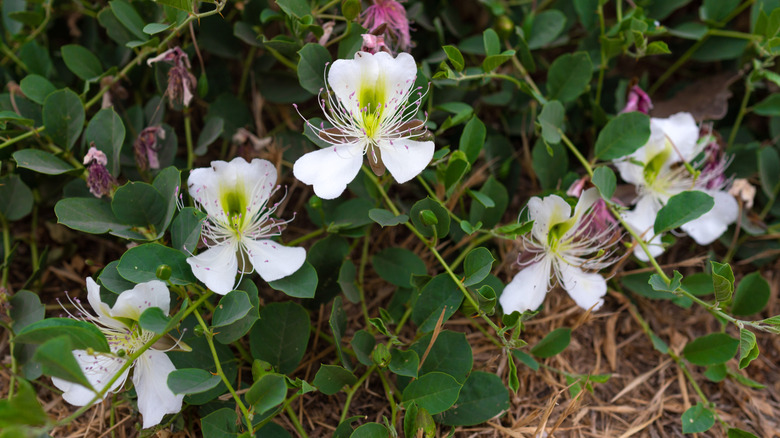
Caper bushes tend to grow 2 to 3 feet high and can extend to a width of 10 feet, though most are a little bit narrower. Since they are evergreens, they'll bring visual appeal to your yard throughout the winter, but they're at their showiest from May through September. That's when their attention-grabbing flowers bloom. Each one has white petals and a profusion of purple stamens that resemble long eyelashes. Some people harvest caper bushes' flower buds, brine them, and use them in savory dishes. If you try this, wear protective clothing because the plants are covered in thorns.
Planting and caring for caper bushes
Caper bushes can be grown from seeds, but purchasing young plants from a nursery is your best bet. That's because caper seeds take their sweet time to germinate. It's not unusual for three months to pass before seedlings break through the soil. If you do go the sowing route, source seeds that another caper bush has produced recently. Otherwise, the seeds may need to undergo a chilling process called cold stratification to sprout properly. Having trouble finding caper bushes at local nurseries? Look for growers that specialize in desert plants or heat-tolerant flowers for sunny gardens.
Though caper bushes will welcome low-moisture soil and long stretches of dry weather, they will protest if their home is too wet. Prevent this problem by planting them in soil that drains water efficiently. If your yard's soil has high clay content, amend it with compost to improve its drainage. Also make sure to avoid common watering mistakes that can harm your yard's plants. Giving caper bushes too much water can do them in. The more your caper bushes have adapted to your landscape, the less water they are likely to need. Check their planting site's moisture level by pushing a finger into the soil. If the top two inches are damp, skip watering that day. If they are dry, it's fine to give the bushes a little drink. Or, use a product such as the Raintrip Upgraded Soil Moisture Meter to assess your caper bushes' hydration needs.