

Determine The Best Length To Mow Your Lawn With These Clever Tips
We may receive a commission on purchases made from links.
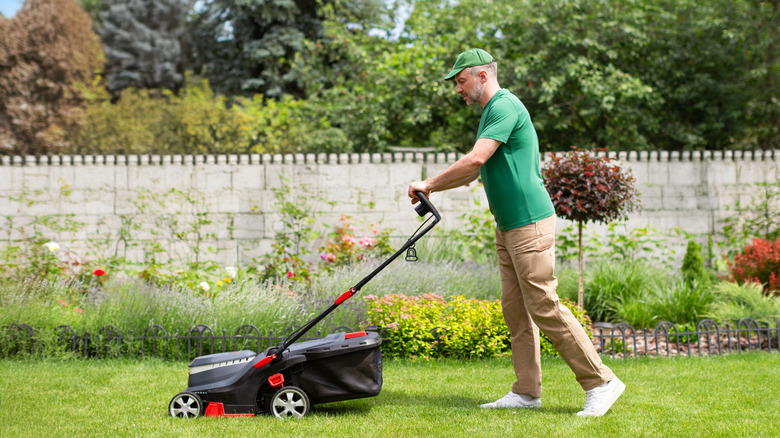
Many Americans who love spending time in their yard obsess over their lawn care. From picking the perfect time of day to water to knowing the best time of year to fertilize, they're careful to ensure they have a lush, green lawn. Of course, that also means mowing at the proper height.
So, how do you determine the best length to mow your lawn? While the one-third rule is the standard for determining how much grass to lop off each time you mow, you first need to know the length you should leave your grass. Making that determination can be as simple or complex as you want it to be.
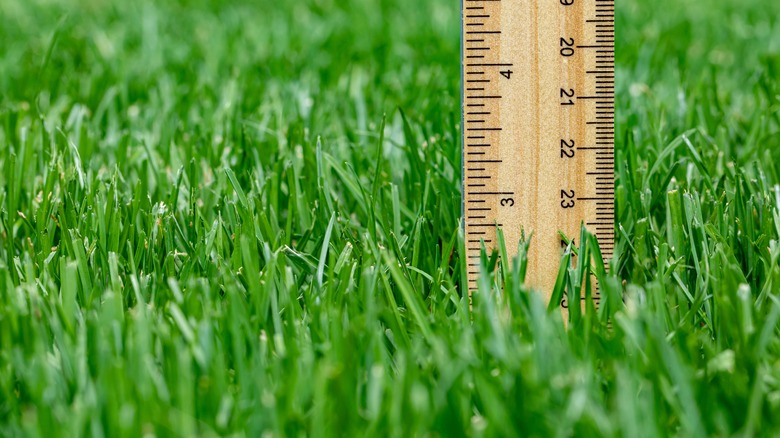
There are a number of charts and graphs for different varieties of grass and different times of year. To keep things simple, with the exception of grasses such as Bermuda and Zoysia (which are supposed to be cut to a length of 2 inches), most grass should be maintained around 2.5 to 3 inches. Unless you feel the need to be very particular about the height, most lawn care experts recommend cutting the lawn at 3 inches. The one exception would be heading into winter, when it can be beneficial to cut it about a half-inch shorter in areas where true winter weather occurs. However, cutting your grass to 3 inches is about more than appearance -– there are actually several benefits to your lawn's health.
How cutting grass at 3 inches helps
Among the health benefits your grass derives from being cut at the 3-inch height is the ability to grow a deeper, stronger root system. This lets the grass gather more nutrients and moisture from a greater area of soil, leading to a healthier, more resilient lawn. This, in turn, makes your grass more resistant to disease and insects. It also makes it better suited to cope with weather extremes.
Other benefits that come from cutting your grass at three inches are even less obvious, but can actually save you time and money. Despite the old lawn care myth that cutting grass short reduces the number of times you need to mow, taller grass actually grows slower. In simple terms this is because taller grass has adequate ability to collect light on its leaves and has no need to grow as quickly relative to shorter grass. Additionally, because of the deeper root system (as well as the increased shade taller grass provides to the soil), you can actually cut back on the amount you water.
The shade provided by longer blades of grass also prevents weeds from gaining a foothold in your lawn. On top of that, the grass' increased ability to produce its own food means less fertilizer is necessary. To enjoy the advantages of having your grass at the proper height, make sure your mower is adjusted to cut at 3 inches. It's also helpful to place devices like a grass gauge in your yard so you know when it's time to mow.