

Why You Should Reconsider Using Coffee Grounds As Fertilizer For These Plants
We may receive a commission on purchases made from links.
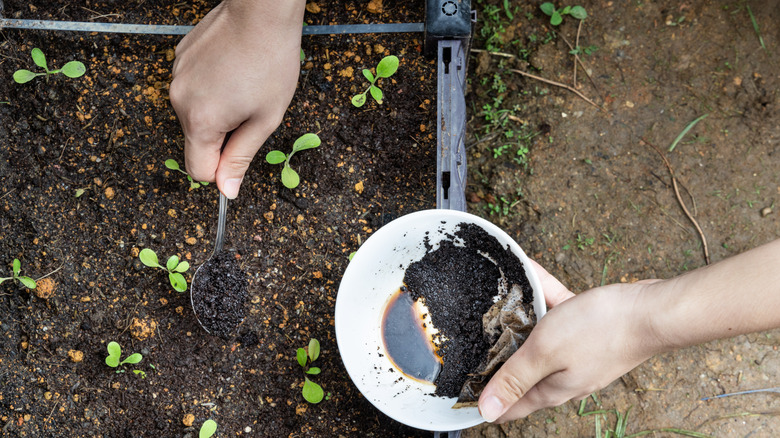
Many gardeners have heard the claim that used coffee grounds are an effective fertilizer for plants. But, is it factually sound or is it one of those lawncare myths you can stop believing? Turns out, it could be a bit of both. While coffee grounds are often touted as the secret to thriving strawberry plants, they can actually cause harm to many other types of vegetation. So, there are ample reasons why you should reconsider using coffee grounds as fertilizer for certain plants.
There is certainly no shortage of innovative ways people utilize used coffee grounds. Some anglers swear by using coffee grounds to keep worms wiggly. If you're out on a camping trip, you can use coffee grounds to repel mosquitoes. Of course, there are also many uses for coffee grounds in gardens, including as fertilizer, mulch, and composting material.
Coffee grounds can, indeed, be an effective fertilizer, because they are particularly high in nitrogen, which is an important nutrient for plants and a common ingredient in commercial fertilizers. They also contain phosphorus and potassium and are a good source of organic material to enrich the soil. Coffee grounds have the added benefits of repelling some insects and killing slugs. Plus, they are relatively easy to use. For the most part, gardeners can simply sprinkle some grounds around the base of plants to reap the benefits. However, depending on which plants those are — like those that do well in alkaline or neutral soil — there can also be some serious downsides.
Plants you shouldn't fertilize with coffee grounds
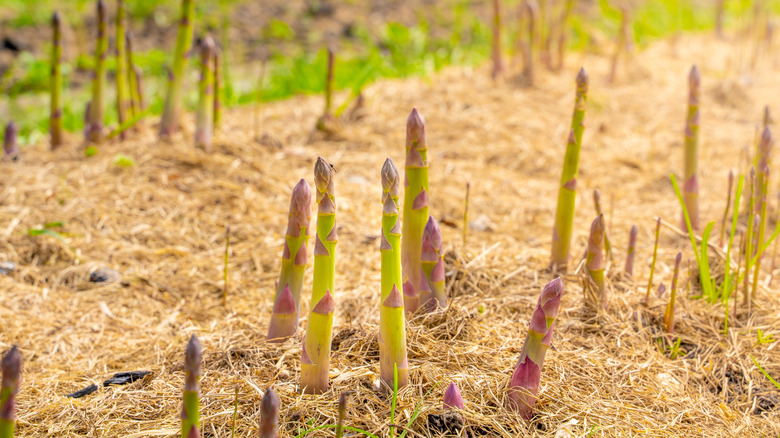
While coffee can perk up plants with its nitrogen, caffeine, and other elements, it is also acidic. This can make it ideal for plants that thrive in acidic soil, such as blueberries, azaleas, peppers, and potatoes. However, plants that perform best in alkaline or neutral soil, such as asparagus, broccoli, kale, and peas, can be severely damaged, stunted, or killed by utilizing straight coffee grounds as fertilizer.
To avoid drastically increasing the acidity level of the soil, the best way to utilize coffee grounds for fertilizer is to compost them before adding them to your garden soil. However, be aware that even this may be too much for plants that are very sensitive to acidity, such as geraniums. It is also advisable to monitor the condition of your garden by frequently testing with a device such as the Garden Tutor Soil pH Test Kit. If you notice an increase in the acidity of the soil around neutral and alkaline-loving plants, cut back on the coffee compost in those portions of your garden.
Like almost anything, too much coffee can actually be detrimental even for plants that love acidic soil. Additionally, since coffee can reduce germination rates and stunt the growth of young plants, it should never be used in newly seeded gardens. Finally, while it is also possible to use leftover brewed coffee to water and fertilize your plants, the same issues regarding acidity apply, so do so sparingly and never use coffee which has had additives mixed with it.