

If You Don't Want Wasps In Your Garden, Avoid Planting This Invasive Herb
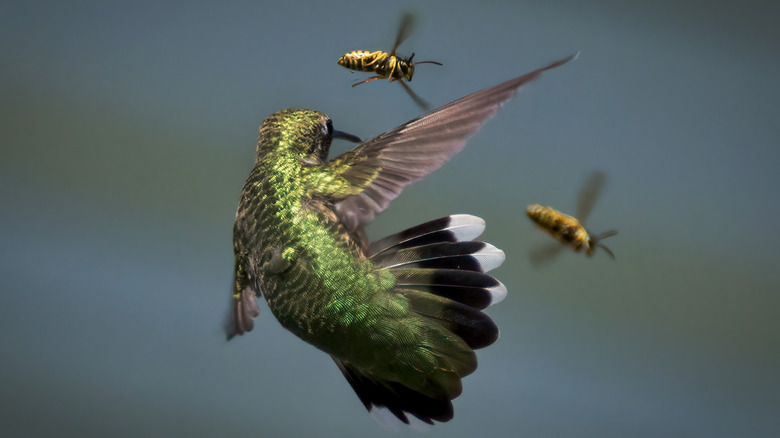
Although some gardeners think twice before killing wasps, most people don't want to see them in their gardens. There are several types of dangerous wasps in the U.S., and while solitary wasps can benefit gardens by preying on garden pests, they can deliver painful stings. Social wasps, like the bald-faced hornet, live in colonies and pose a greater threat. While taking steps like hanging fake wasp nests may help deter these stinging offenders, often those efforts are negated by having powerful attractants such as epazote growing in your plot. If you're trying to cut down on the local wasp population, not planting epazote is a good starting point.
Since it is an invasive species, it seems like a no-brainer not to plant epazote in your garden. However, even though it can easily take over your garden unless you are constantly tending to it, epazote is a popular plant in many areas. Some consider it a plant with medicinal value for treating inflammation, as well as respiratory, stomach, and digestive issues. It is also a popular spice, particularly for Mexican and Central American recipes. All those benefits aside, though, it is still known to attract wasps, which can be viewed as either a positive or a negative.
Dealing with wasps and epazote
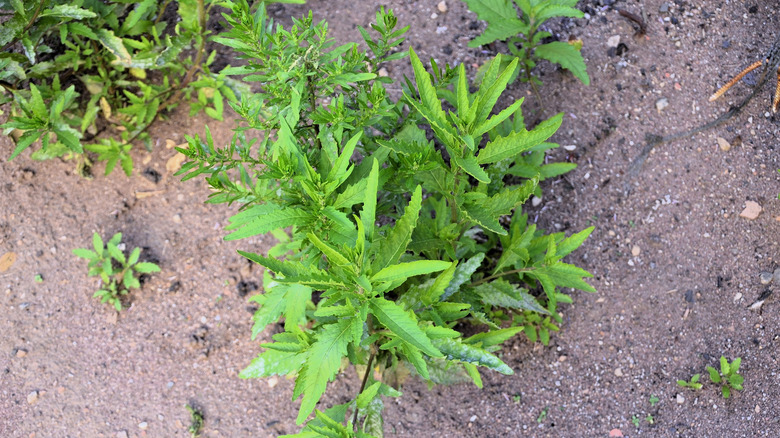
When it comes to wasps and epazote, you have to weigh the risks and rewards for each. It also helps to consider the goal for your garden and decide whether the invasive species will do more harm than good. If you are hoping to attract predatory wasps to take care of problematic pests such as aphids, beetles, caterpillars, and crickets, add epazote near the plants most susceptible to these nuisances.
If you're trying to minimize the number of wasps in your garden but still want to reap the benefits of freshly harvested epazote, you have some options. By planting epazote in the far reaches of your garden, you can somewhat isolate the areas in which wasps will most likely be found. Another option is to place the invasive plant in pots or small raised beds isolated from your garden, house, and primary outdoor living space. Growing it in containers also eliminates the risk of it overspreading.
Should you have a zero-tolerance policy towards wasps but still want fresh epazote, there is yet another option. Growing your epazote indoors will allow you to remove wasps from the equation, although you will have a very fragrant scent to deal with. Epazote also requires full sunlight, so it is best in a window planter or a controlled environment, like the AeroGarden Harvest Elite Indoor Garden.