

Choose The Best Fence Post Setting Method For Your Yard With These Tips
We may receive a commission on purchases made from links.
Whether you've seen telltale signs it's time to replace your fence or are adding a privacy fence for security, there are several decisions you must make. The size, dimensions, and design of a fence are obvious choices that must be addressed. You will also need to pick the material and determine the cost of building a privacy fence. One decision first time DIY fence builders often overlook is how they will set the support posts. However, if you want your fence to stand strong in a variety of weather conditions for years to come, plus act as an outdoor update that'll add serious value to your home, it's important to choose the best fence post setting for your yard.
There are numerous ways to set fence posts, ranging from simply tamping down the soil to filling the hole with foam. Depending on the composition of your yard and the materials you choose, you may not have many choices. However, even if those factors are pointing you towards the only viable option, it is still important to know what that is and utilize it. While you may not need to use additional fill materials or increase the sink depth on every post, it is almost always necessary to somehow reinforce posts on the ends, those supporting gates, or those that cannot be sunk deep due to the type of terrain. The key is choosing the best option, even if it's the only one.
Soil composition dictates type of fill for setting posts
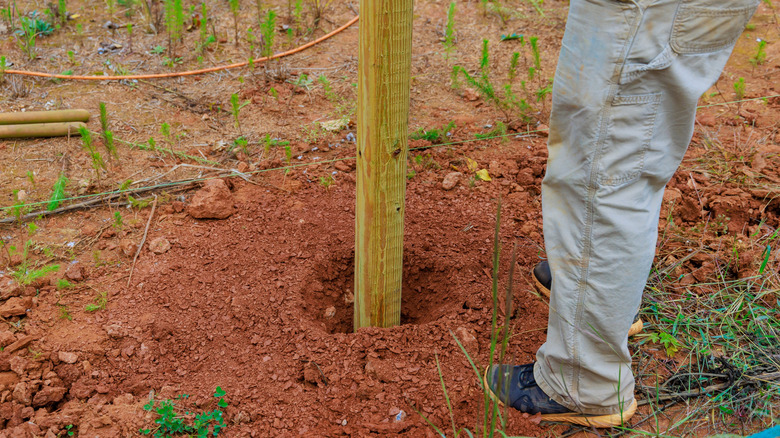
For starters, when setting your posts, the rule of thumb is to dig deep enough to set one-third of the post's length in the ground. As an example, if you have a 6 foot post, 2 feet of it should be buried. Additionally, digging down an additional 4 to 6 inches and adding a layer of gravel beneath the post can help drain water. If you are in clay or other very solid ground, this should be adequate. In loose sand and other non-compact soil, posts may need to be sunk deeper to achieve stability.
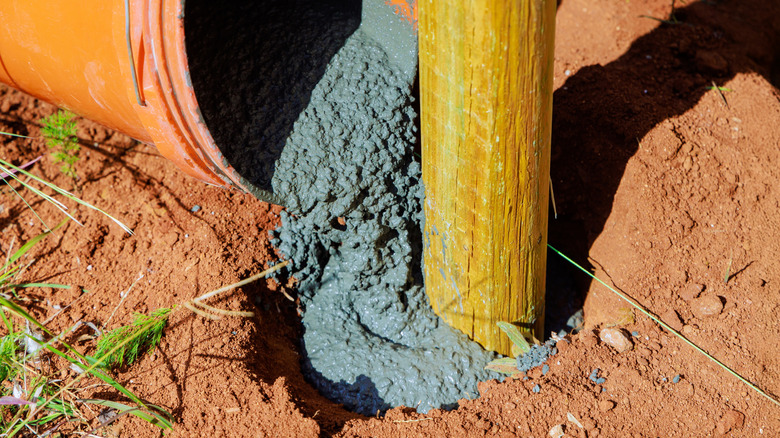
In clay or solid dirt, you can often get by with just filling the hole around the post with gravel, then covering with a light layer of soil, especially for interior posts. In loose soil or on the posts that receive the majority of the strain in any type of soil — corner posts, bracketing gates, and at the end of open fences — filling the hole with concrete will add support. The downside is that concrete can pool water near the base and expedite wood rot. Sloping concrete away from the post can solve this problem.
The type of concrete to use is yet another decision to make. Using a fast-set material such as Quikrete is simple and less messy, as all you do is pour the dry powder into the hole and add water. However, it is best used in compact soil. If the soil is very loose, you need to add a form inside the hole to concentrate the concrete. For maximum strength in all types of soil, wet concrete is recommended, although it is messier and takes the extra step of mixing.