

Tips For Successfully Taking Care Of Your Hyacinth Plants

Hyacinths (Hyacinthus orientalis), also known as common or Dutch hyacinths, are perennial flowers grown from a tunicate bulb. These delicate and delightful blooms are a popular garden addition thanks to the variety of colors available from different cultivars, including white, yellow, and purple. Hyacinths are also a favorite option for indoor containers, often through a process forcing winter blossoms. Gardeners love to populate their spaces with hyacinths to take advantage of their sweet fragrance, which attracts bees. When you follow the proper care tips, like planting under the right conditions, not overwatering, and carefully propagating your bulbs, you can also find success with hyacinths.
When given the right mixture of conditions and care, hyacinth plants are considered one of the easier bulbs to care for in the garden. If you're looking to plant perennials in your garden once and they'll never leave, hyacinths are a good choice for a beginner.
Handle bulbs with care
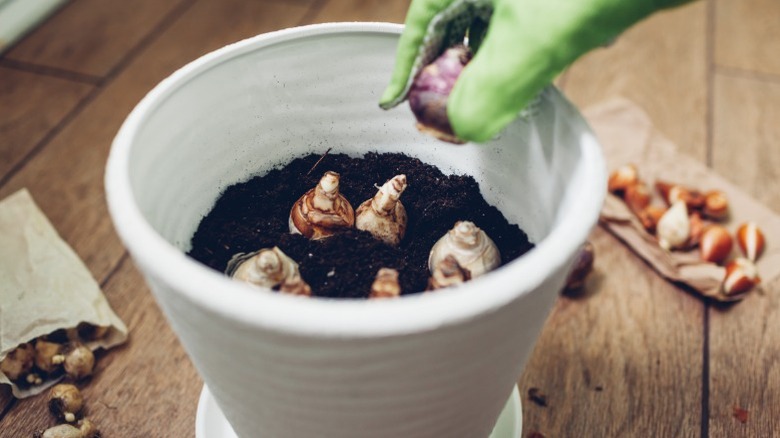
Hyacinth bulbs may cause your skin to itch if you don't handle them with care. This reaction is caused by calcium oxalate crystals in the bulb, which come out of the bulbs during handling. These crystals might not affect everyone, but will cause anyone with sensitive skin to have a reaction. Signs that you're reacting negatively to calcium oxalate crystals include contact dermatitis and general itching and burning.
To combat this, make sure to always wear gloves before touching hyacinth bulbs during planting or when digging the bulbs up at the end of the season. You should also wash your hands thoroughly with soap after touching the bulbs, especially if you touch them with your bare skin. Hyacinth bulbs are also a danger to younger children and pets due to their poisonous qualities. Make sure to keep them away to avoid accidental ingestion by a curious kid or dog of this plant you might not know is deadly.
Plant under the right conditions
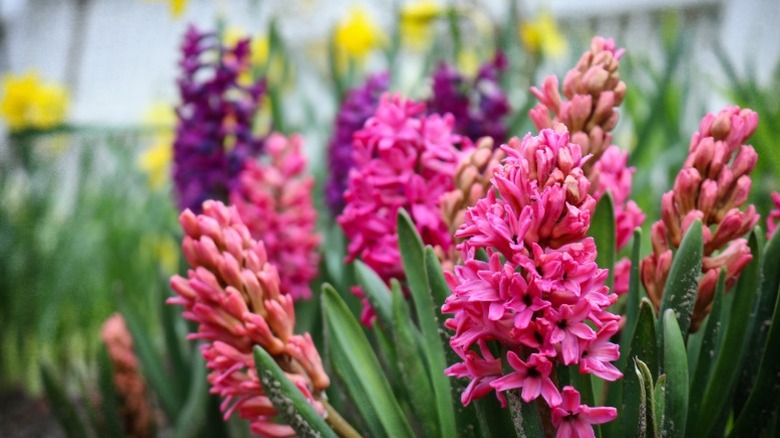
With many bulbs, hyacinths included, preparation for springtime blooms begins the autumn before. Begin preparing your bulbs to plant in early autumn, between September and November, before the ground freezes. The weather will have started to cool but it shouldn't be too chilly to work outdoors. Ideally, you will time it after the first frost, but before the ground becomes too frozen to work with. Otherwise, you risk your plants not establishing roots effectively before springtime blooming.
Well-drained, well-fertilized soil is key to happy, healthy hyacinths. Try to plant hyacinth plants only in soil that has been improved with organic material, with a little bit of sandy consistency. At the time of planting, add fertilizer to the soil for improved growth. Container-grown hyacinths should be fed fertilizer regularly that is high in potassium, until about six weeks after flowering. For light, bright light and even direct sunlight is ideal for the best blooms.
Plant at the proper depth
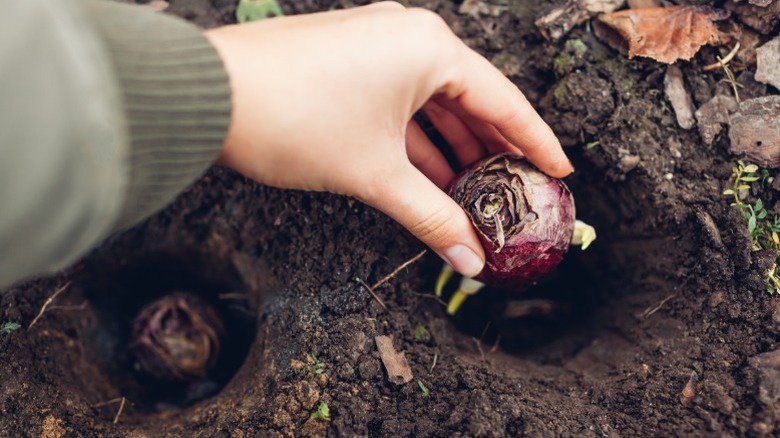
Hyacinth bulbs are a hardy bulb that should be planted in the ground outside in fall. Depending on the variety, you might need to plant your bulbs at different depths. Not every flower bulb should be planted at the same depth or you will likely not have some flowers sprout in the spring. Hyacinths typically are planted four inches to six inches deep, with the pointy end of the bulb facing up. Smaller bulbs should be planted slightly higher.
Consider where your hyacinths will look the best in your garden. They grow very well in containers, which can be ideal to showcase the sweet-smelling blooms in a prominent location. Depending on your garden layout, you also need to focus on how your bulbs are spaced. Both larger and smaller bulbs do well spaced about four to five inches apart. Once you have them planted at the right depth and distance, hyacinths are fairly fuss-free plants that are great for gardening beginners.
Do not overwater your bulbs
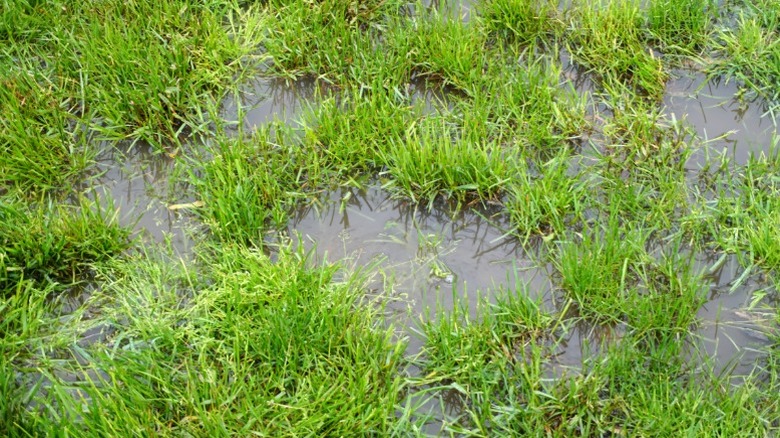
Hyacinths require plenty of water immediately after planting, but too much can be detrimental. One of the most common mistakes to avoid when planting hyacinths in your garden is overwatering, especially in poorly-drained soil. Hyacinth bulbs are prone to rotting in overly wet environments, meaning that moist conditions for long periods of time lead to them breaking down. If the soil isn't dry, it's important to leave it alone. The roots of your hyacinth will become mushy if overwatered and potentially.
During winter, hyacinths will not do well in soggy and wet conditions. When planting in the autumn, make sure that the site will receive proper drainage throughout the rest of autumn through winter or your bulbs may not come up in spring. Any signs of standing water may mean disaster for your hyacinth bulbs. As long as you have a plan to avoid the bulbs receiving too much water, you can rest easy during the winter months.
Divide plants to avoid overcrowding
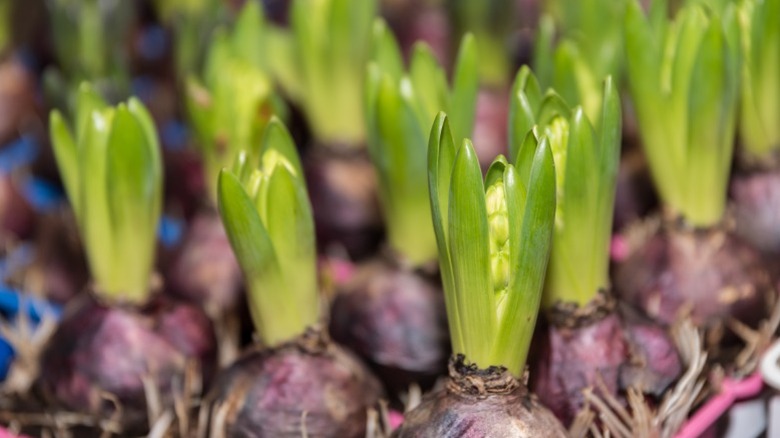
If you choose to grow your hyacinths outside, eventually you might think about dividing the bulbs. Over time, the bulbs of the plants will get bigger to the point that they will start crowding each other. Dividing your hyacinth bulbs will make this less likely. Plus, you'll end up with more bulbs to plant in another area of your garden or to give to friends. Of course, you can also buy new hyacinth bulbs instead of propagating them.
Dividing hyacinths is fairly easy once you know how to do it. After digging up the bulb after the foliage has died back, you should see many little bulbs (offsets) surrounding a larger, parent bulb. Carefully remove those tiny bulbs, being careful when handling them to avoid damage. These small bulbs can be stored in closet or cupboard for next year on a layer of moist sand. However, most people treat hyacinths as annuals, because they are relatively cheap to buy year after year.