

Are Landscaping Lights Harmful To The Hummingbirds In Your Yard?
We may receive a commission on purchases made from links.
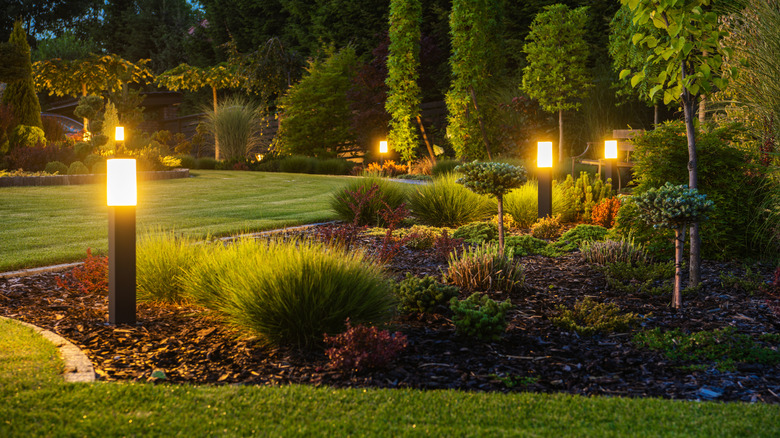
Across North America, people go to great lengths to encourage hummingbirds to flock to their yard. From strategically putting out hummingbird feeders to picking the perfect placement for hummingbird swings, the efforts to attract these tiny avians is endless. However, while most everyone knows hummingbirds will avoid noisy yards, many don't realize landscaping lights are just as likely to scare them off.
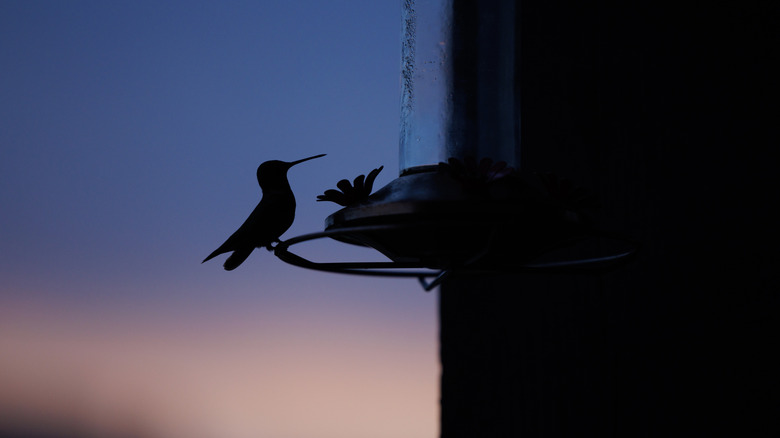
Anyone who has watched hummingbirds zip around their yard furiously beating their wings understands these little birds need to rest eventually. After a long day of rapid flight and dizzying maneuvers, hummingbirds will pick out a suitable branch and hunker down for a few hours. During this time, they enter a hibernation-like state known as torpor. While they are in torpor, their heartbeat drops drastically –- from around 1,200 beats per minute to about 50. This allows their body to recover. They become so relaxed that at times you may see hummingbirds hanging upside down if they are in deep torpor.
While this state of torpor is critical to hummingbirds' health, consistency in where they sleep is not. These birds typically change where they sleep on a near-nightly basis, but may remain in the same general area. Although they build nests to lay eggs, they don't sleep in those nests. They do, however, prefer to find a resting place close to their food source. However, if they're unable to get essential rest due to landscape lights or other disturbances, they are unlikely to stick around, even if there is food available.
Make your yard a friendly place for hummingbirds to rest
The absolute best way to make your yard a safe space for hummingbirds is to reduce light pollution by darkening your outdoor area. The good news for landscape light lovers is there are other things that can be done — you don't necessarily have to choose between illuminating your landscape and hummingbirds. You just need to do it properly, picking the right placement and type of lights.
Both the color and the brightness of your landscape lights will make a tremendous difference. Many popular LED landscape lights give off a cool illumination on the blue end of the spectrum. This type of lighting has been shown to be particularly disruptive to birds and other wildlife. Warm lights, which radiate an amber or brownish tone, are far better. It's best to shoot for lights that are in the 2100-2200 range on the Kelvin scale. Additionally, it's best to pick lights that have lower lumen levels. Basically, you should choose lights that are just bright enough to suit your needs.
Beyond the qualities of the bulb, the style of light housing can make a difference. Shielded lights (those that have a shield or cap over the top) are designed to direct light down. This allows the sky above to remain relatively unaffected. Finally, try to leave some portions of your yard unlit and turn off any unnecessary lights whenever possible.