

Get Your Bird Feeder Ready For Warmer Weather Using This Household Staple
We may receive a commission on purchases made from links.
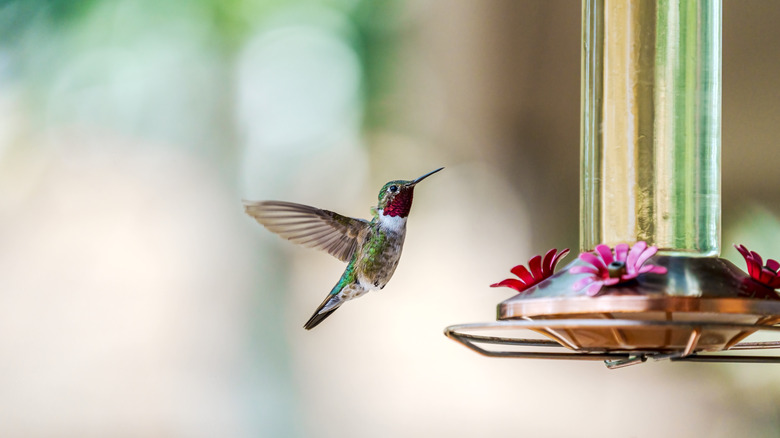
If you happen to see a hummingbird feeder wrapped in aluminum foil like a soda can from a 1980s field trip, there's a good reason for it. People love seeing hummingbirds in their gardens and yards. These frisky fliers are not just fun to watch, but hummingbirds are effective pollinators and help control mosquitoes and other harmful insects. As a result, gardeners and backyard birders do all they can to attract hummingbirds to their lawns, including putting out nectar feeders and water features to keep hummingbirds cool and hydrated. However, the very nectar that is attracting the birds to your yard can also make them seriously sick if it gets too hot.
With that in mind, it's not just important to know the best time to put out feeders, but also the best way to keep the nectar in the feeders from overheating. Excessively hot nectar can cause a variety of issues for hummingbirds. Burnt tongues are one issue. Much more serious is the sickness which can result from ingesting spoiled nectar, which can become contaminated with disease causing bacteria and mold. Hot nectar has also been shown to damage the metabolic system of hummers. So, it is important to keep the temperature of the nectar at or below 90 degrees, even as the summer heat soars. That's where the aluminum foil comes in.
Aluminum foil can help keep hummingbird feeders cool
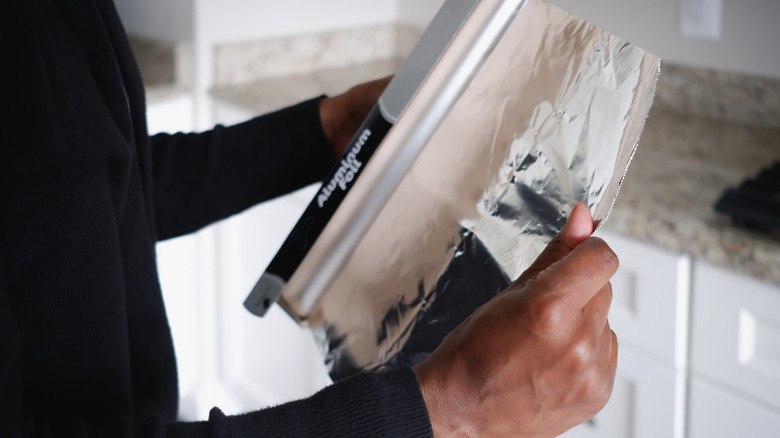
One obvious way to keep nectar cool is to place your feeders in the shade, out of direct sunlight. However, when that alone isn't enough, wrapping them in aluminum foil like Reynolds Wrap Heavy Duty can be helpful. This is not because aluminum foil has any insulating properties. Instead, it works because the shiny metal sheets reflect both sunlight and heat, preventing them from affecting the nectar inside the feeder quite as much as they would otherwise. In fact, studies have shown foil can effectively block almost all of the radiant heat that contacts it.
To make an effective heat shield for your feeder from aluminum foil, simply tear off a piece of foil that is long enough to wrap entirely around the nectar canister of your feeder. Then, roll the empty canister in the foil. You can use tape or twine to hold the foil in place or just wrap the ends tightly to one another. Once that is done, you are ready to fill your feeder and place it back on its hook.
While foil-wrapped feeders will stay significantly cooler than unprotected feeders, there is still a limit to the power of foil in this regard. To be on the safe side, try reducing the amount of nectar you put in the feeder so that it is emptied much more frequently during the summer months. Additionally, if your area is experiencing an extended spell of extreme heat, it is still advisable to change out the nectar at least once a week if the feeder hasn't been emptied by then.