

Upgrade Your Garden Bed With The Help Of Your Lawn Clippings
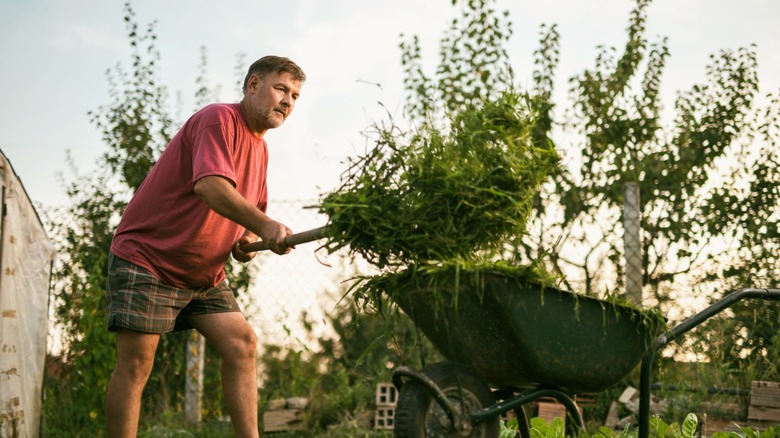
Maintaining a rototiller can be a pain for the average gardener and it's definitely not one of the tools a beginning gardener absolutely needs to get started. But figuring out other ways to enrich your soil without tilling can appear impossible, until you add your lawn clippings into the mix. The lawn clippings that you create week after week can be a vital source of organic nutrients to build a bigger, better garden bed. Utilizing a tried and true method known as lasagna gardening, a type of no-dig gardening, you can transform compacted, poor-quality soil into rich, usable growing media.
The theory behind lasagna gardening is simple, and it's a great way to reuse the bags and bags of grass clippings your lawn creates each year. While it's not quite the same as Italian cuisine, this method emulates the construction of a simple lasagna dish. Starting at the bottom on top of the untilled soil or cut grass, you build up layer upon layer of organic material. Lawn clippings when fresh have a lot of great nitrogen stored in them and when they're dry they are a great source of carbon. Both of these are important to create a reaction that gradually breaks down the grass clippings and other material into usable, composted soil. You can include other lawn waste, too, as this method is a simple way to reuse dead flowers to help your garden grow.
How to make lasagna gardening work for you
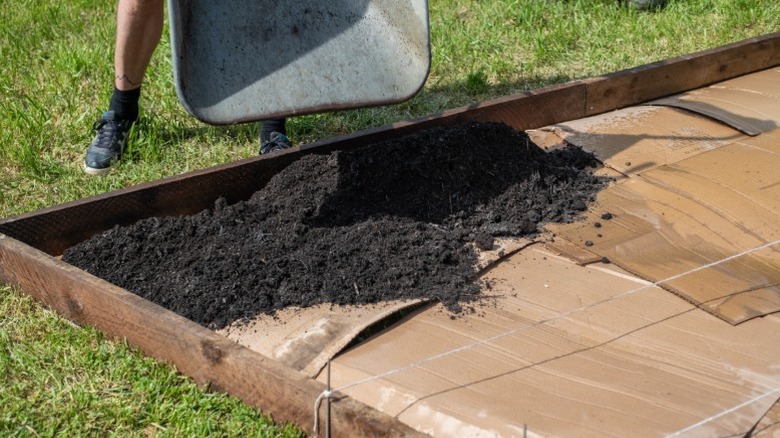
To get started with the sheet mulching method in your garden, make sure you save your garden and lawn waste. Start collecting lawn clippings after each time you mow your yard so that you have plenty of green and brown materials to use in your layers. It's also a good idea to save simple brown cardboard or old newspapers. These two materials are great tools to smother weeds, grass, and other unwanted plants your "lasagna" bed.
Once you have enough lawn clippings, cardboard, and other organic waste, you can start building your lasagna up. Begin with branches to provide air circulation, then alternate between layers of brown compost and green compost. Given enough time, the layers will compress and break down into rich compost perfect for planting in.
With lasagna gardening, you can use a variety of lawn waste on your garden beds beyond grass clippings. But a mistake beginning gardeners make way too often with this method is to include grass clippings that contain weed seeds or diseased plants. Weed seeds will contaminate your entire garden bed and diseased plants, even in dried lawn clippings, can spread disease to any plants you grow in the future. Remember this tip as lasagna gardening is a cold composting process that does not eliminate disease. Another tip to bear in mind is that the layers you create with sheet mulching can take a long time to break down. Start planning this type of garden bed in late fall if possible to give the layers time to break down.