

How And When To Water Your Outdoor Seedlings To Help Them Thrive
We may receive a commission on purchases made from links.
It is no secret that water is the key to having thriving garden plants. However, there are a multitude of watering mistakes to avoid, including underwatering, overwatering, and watering at the wrong time of day. While some blunders, such as not watering after heavy rain, are common sense, there is a bit of nuance as to how and when to water your outdoor seedlings to help them thrive, as this can change depending on their growth stage. After all, this seedling stage is when plants are at perhaps their most vulnerable, whether they were seeded outdoors or transplanted after sprouting in an indoor environment.
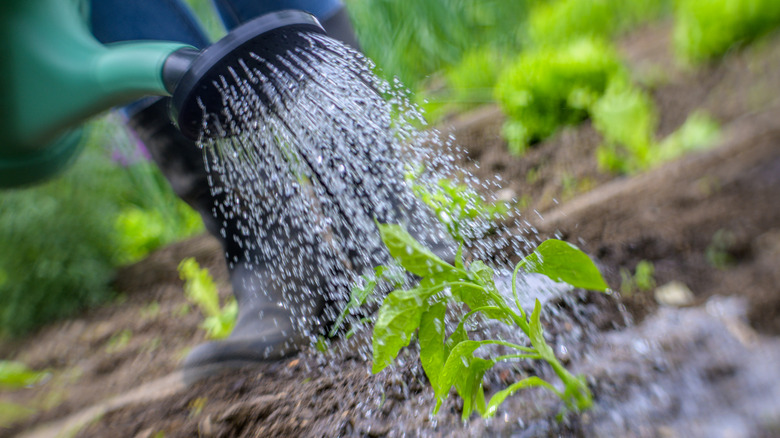
One of the main reasons plants are so fragile during the seedling stage is they have yet to develop a really strong, deep root structure. As a result, they are easily uprooted and/or washed away if too much water pressure is exerted. If watering with a hose, you should use a nozzle such as the Rainpoint Garden Hose Nozzle set to a fine mist pattern. Water cans need to have a fine, small hole pattern. With either of these overhead watering methods, avoid putting too much water directly on the plant or where it displaces the soil around the base of the seedling.
As seedlings grow and establish stronger roots, they are able to withstand more water pressure from both watering and rainfall. However, if practical given your garden setup, a soaker hose is a good option to ensure seedlings get adequate water without harmful water pressure.
How much is too much water for your seedlings?
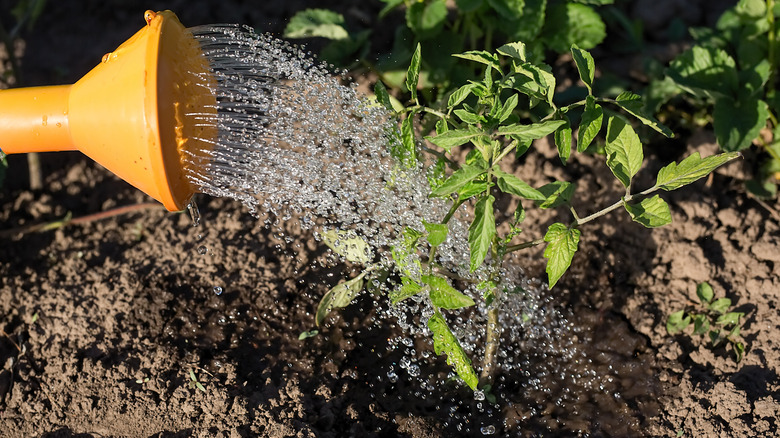
While water is essential even for the most fuss-free garden plants, too much of a good thing can be just as damaging as too little. So, while many advocate for daily waterings, you can't necessarily just set a schedule and stick to it. This is because several factors can affect the amount of water seedlings need outdoors, including the type of soil, heat, and the amount of rainfall, humidity, and dew.
The goal is to keep the soil around the seedlings wet, but not saturated. Frequent soil checks will help guide you as to whether they need more or less water. Standing water is an obvious sign the seedlings have more than enough. Aside from that, the best way to tell is sticking a finger about half an inch into the soil. If it feels moist, they are fine. Dry-feeling soil indicates they need a little water. Mushy soil is an indication they are being overwatered. Looking at the plant is another way to tell, as saggy, droopy, or wilting seedlings need watering, while yellow leaves are a sign you may need to cut back.
Overwatering not only makes it difficult for plants to absorb nutrients, it can also cause the fragile roots of seedlings to lose their grip, causing the plants to uproot and tumble. If you see standing water, try to drain it away from the plants. It may be necessary to groove small trenches to help with that. If possible, you can also use a fan to increase the breeze and aid in the drying process. You should also refrain from watering until the soil has stabilized.