

Keep Your Lawn Vibrant With This Useful Ingredient (But Be Wary Of Its Downsides)
We may receive a commission on purchases made from links.
Unless you've taken steps to create a no-mow lawn, odds are you hope to see vibrant green grass when you look out over your yard. To achieve this unblemished appearance, many people spend countless hours mowing to control weeds and watering at the best time of day. While those steps are certainly helpful, one of the quickest ways to get a gloriously green lawn is to apply liquid iron.
Products such as LawnStar Liquid Iron are sold online as well as at most hardware and other retailers that handle lawn care supplies. Liquid iron is typically easy to apply and not only changes the coloration of your grass, but makes it more resilient as well. However, there are two sides to the liquid iron coin. For all the benefits this solution can provide, there are a number of possible harmful effects as well. Those who misuse liquid iron my find their lawn turning black instead of green and their soil balance out of whack. So, while you can certainly keep your lawn vibrant with this useful ingredient, you should be wary of its downsides.
Liquid iron can save your lawn
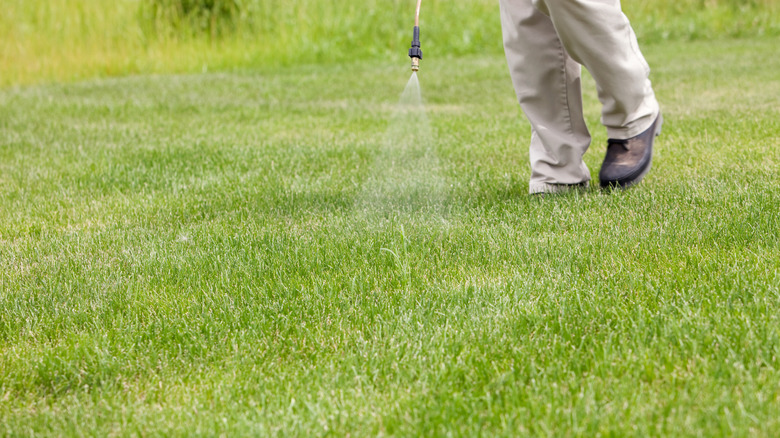
Liquid iron is basically like a vitamin supplement for your grass. Iron assists with the process of producing chlorophyll, which is what actually gives grass its green color. Yellowish grass can actually be a sign of iron deficiency in the soil. Applying liquid iron, which can be done in spring, summer, or fall, can help correct this deficiency, allowing grass to regain a deep green color. Additionally, grass that is in higher pH level soil tends to benefit more, as iron is typically less available in this soil composition.
Another benefit of liquid iron is stronger, healthier, more resilient grass. Its bright green appearance doesn't just look healthy — it is healthy. The added iron can result in increased root growth. This is vital in that it allows the grass to more efficiently collect needed nutrients over a wider area, making it more resilient in times of extreme weather. It also makes disease, fungal infection, and insect infestations less likely.
In addition to all of these benefits, liquid iron is simple to use and nets quick results. Once you've chosen a liquid iron product that is compatible with the strain of grass growing in your yard, just mix it with water in a handheld sprayer according to the manufacturer's instructions. Then apply an even coat over your entire lawn shortly after watering. It is typically recommended to water your lawn again after the application. Most often you will see a noticeable difference after a couple of days.
Liquid iron can also cause harm
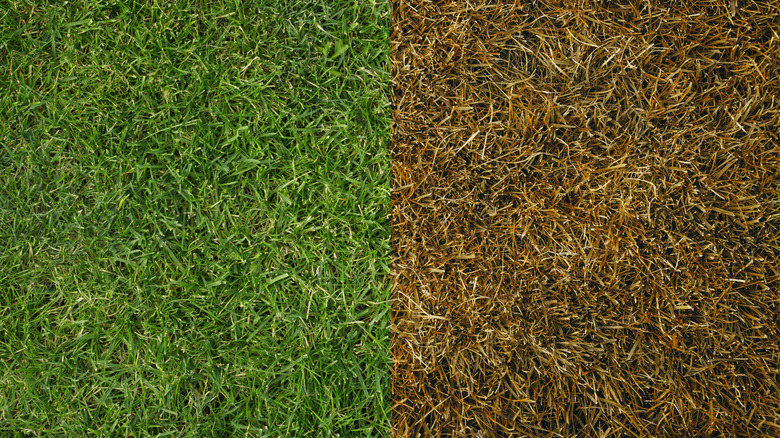
While the goal of applying liquid iron is to get a lush, vibrant green color across your lawn, overapplying can have quite the opposite effect. Too much iron can cause grass to turn brown and, sometimes, even black. It can also completely wreck the soil composition, drastically dropping the pH level, and make it difficult for grass to absorb what available nutrients there are in the soil. It can also greatly stress your lawn.
Potential harm from liquid iron isn't just restricted to your grass. The vast majority of these products will stain almost everything in your backyard, including anything made from concrete, metal, pavers, wood, or fiberglass. This means just about everything from patios to stepping stones will become discolored if doused with this substance. So, you should be very cautious when applying near any solid object. Because of this, you should also avoid applying on windy days.
Should you accidentally over apply or hit an unintended target with liquid iron, water is the best remedy. Any hard objects or structures that are contacted with liquid iron should be thoroughly rinsed immediately. If you notice signs that your lawn has received too much liquid iron, such as discolored grass, water those areas for up to half an hour every day until it improves. Aerating the soil can also help remedy the problem.