

The Low-Maintenance Edible Flower Anyone Can Grow In Their Garden

We may receive a commission on purchases made from links.
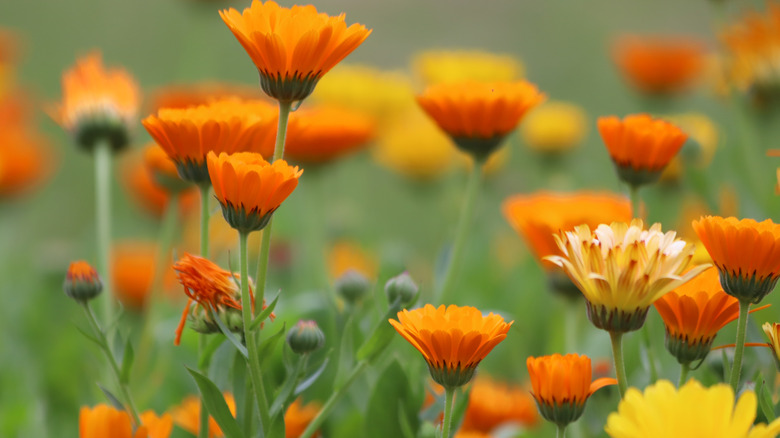
The humble pot marigold (Calendula officinalis) is the perfect fuss-free plant for beginning gardeners. Also known as ruddles or Scotch marigolds, pot marigolds produce yellow, orange, or red flowers that bloom from spring through early fall. When the blossoms appear, they emit a honey-like scent that beckons bees and butterflies. Plus, they can attract garden helpers such as ladybugs and lacewings in addition to pesky insects like thrips and whiteflies. In fact, many gardeners use pot marigolds as companion plants for roses and vegetables as their sweet-smelling flowers are great at drawing pests away from other plants.
The best part is that marigolds thrive in nearly every part of the U.S. To be more specific, they can grow in USDA hardiness zones 2a through 11b – which even includes most of Alaska and Hawaii. Whether it's planted in full sun or partial shade, it's content in multiple kinds of soil. Plus, you can even grow this flower as a medicinal plant in your garden if you know how to take advantage of its natural anti-inflammatory qualities. Pot marigolds are also a lovely addition to a culinary garden since their edible petals and leaves can give salads, soups, and even rice a pop of color and peppery flavor. The petals can also be dried and made into tea. Given their many uses, and minimal demands, these cheery annuals could be a great addition to your garden.
Pest and pathogen management for pot marigolds
In general, pot marigolds can handle some nibbles from thrips, whiteflies, and aphids. However, if they're drooping or showing other signs of stress when pests visit, consider treating them with something like Garden Safe ready-to-use insecticidal soap. With this option you should only apply the soap when you don't see ladybugs or other insects that eat pests as the soap is likely to kill them as well. Also, try to apply insecticidal soap on a cool and somewhat cloudy day so it doesn't burn the plant but avoid using it when you are expecting rain. With this in mind, if your pot marigolds are drawing snails, slugs, or cabbage loopers then no insecticidal soap is even needed. Simply pick these pests off of your plants.
Pot marigolds aren't particularly disease prone, but they can sometimes suffer from powdery mildew or cucumber mosaic virus (CMV). Powdery mildew looks like a white powder, while CMV can cause misshapen foliage and a distinctive yellow-and-green pattern on leaves. Both of these diseases can impede plant growth. Luckily, growing pot marigolds in sunny spots with plenty of airflow can discourage powdery mildew from forming in the first place. For CMV, disinfecting your gardening supplies and disposing of infected plants are two of the best ways to combat the disease. Perhaps surprisingly, WD-40 can be good at removing dirt from your garden tools, but you'll also need rubbing alcohol, a 10% bleach solution, or even Lysol all-purpose cleaner spray to eliminate pathogens.