

The Fast-Growing Flower That'll Turn Your Yard Into A Hummingbird Haven
We may receive a commission on purchases made from links.
For those who enjoy spending time outdoors, hummingbirds are a welcome addition to their outdoor living space. These tiny avians, with their erratic, rapid-paced movements, are entertaining to watch and are a favorite among backyard birders across the United States. Anyone in the Southern U.S. wishing to ensure they have a constant flow of the diminutive birds in their backyard should plant lion's ear (Leonotis leonurus), the fast growing flower that'll turn your yard into a hummingbird haven.
Also known as lion's tail, lion's ear provides all the essential elements for attracting hummingbirds. It is well-known among bird enthusiasts that hummingbirds will flock to your yard if you add more color, especially reds, yellows, and oranges. While this can be accomplished by tying colored ribbons to trees or adding various flowering plants to your lawn and garden, lion's ear can add a splash of color as well as provide long-lasting nutrition from its nectar. This means you don't have to fret over the best time to put out your hummingbird feeder, either, as lion's ear flowers not only provide an ample supply of nectar, the shape of their florets facilitates easy feeding for hummingbirds.
Lion's ear, which is native to Africa, is actually a blooming shrub, which can grow as tall as 6 feet high. In the U.S., it can be grown in hardiness zones 8 through 11. In the upper reaches of its growing range, lion's ear typically blooms in summer and fall, making it an ideal source of nourishment for hummingbirds as they prepare for migration. Plants grown in the lower portions of its growing range can continue to bloom throughout the year.
How to grow lion's ear to attract hummingbirds
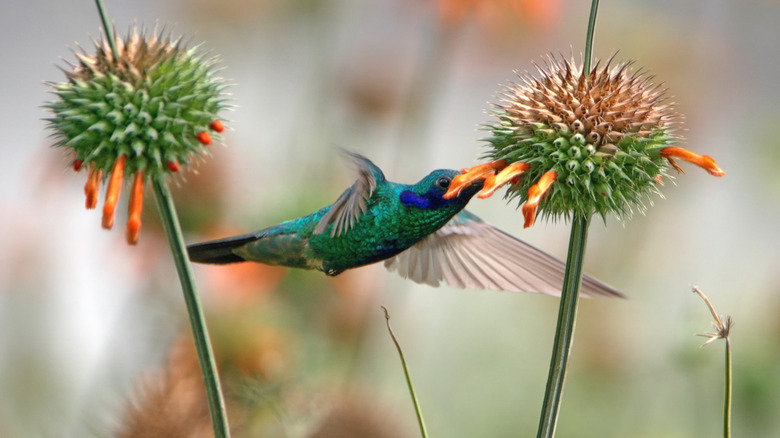
Lion's ear is relatively easy to grow and maintain. If you have access to cuttings, you can utilize those to start new plants. Otherwise, you will need to procure some seeds, such as The Clayton Farm's Leonotis Lion's Tail seeds. It is typically recommended to start lion's ear seeds indoors, especially if you are planting in an area that is prone to frosts or freezes. The seedlings can then be planted outdoors once the threat of frost has passed. It is also possible to grow lion's ear in a container, which can be moved indoors during winter weather.
Ideal soil for lion's ear is a sandy loam type of soil. However, the plant can fare well in any neutral soil and can handle soil that is a bit alkaline as well. It is important to pick a spot that is in full sun and drains well, as soil that retains too much water can be detrimental to lion's ear. It typically isn't necessary to fertilize lion's ear or enrich the soil, as it has evolved to thrive in relatively poor soil conditions. Additionally, given it is very drought tolerant, watering should be minimal to moderate. Overwatering can stunt or kill lion's ear.
Otherwise, maintenance typically involves removing deadheads and pruning. If the plants are to remain outdoors in areas that freeze, it is recommended to drastically prune the lion's ears before cold weather sets in. Most often, even if the plants freeze during the winter, they will re-emerge healthy in the spring.