

The Natural Fertilizer You Should Avoid Using Near Blueberry Bushes And Potato Plants
Ash from your fireplace can nourish many garden plants with calcium, potassium, and other must-have nutrients. Like baking soda, it's often used to help tomatoes thrive. Both substances have alkaline pH, which is thought to keep some problem-causing fungi under control. Though above-neutral pH levels benefit some plants, they're likely to harm others. Plants that can't tolerate alkaline soil may perish if wood ash enters their growing environment and raises its pH level. Similarly, alkaline soil is risky for plants prone to pathogens that crave elevated pH.
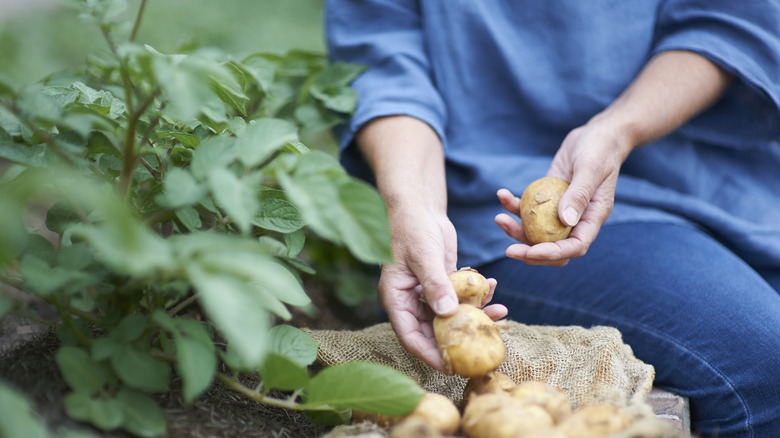
Josh Gardens, the master gardener known as @theplanttechie on Instagram, says wood ash shouldn't go near one popular fruiting shrub. "I recommend avoiding it on acid-loving plants like blueberries," he told Outdoor Guide in an exclusive interview. "One major concern is over-application, which can significantly raise soil pH. This increase in alkalinity can make the soil unsuitable for plants that prefer more acidic conditions." A beloved root vegetable is also on Josh's "no wood ash" list. "Potatoes, for example, are highly susceptible to developing potato scab when exposed to alkaline conditions, so it is best to keep wood ash away from them," he advises.
Other plants that demand low pH levels may be sensitive to wood ash as well. These include cranberries, azaleas, camellias, gardenias, holly, and mountain laurel. Charred remnants also aren't suitable for freshly sprouted plants. According to Josh, "young seedlings with tender roots can be damaged by wood ash, so it should never be applied directly to newly planted beds."
Keeping acid-loving plants safe when using wood ash
With careful planning, it's possible to use wood ash in a garden that contains some acid aficionados. First, don't apply wood ash to soil near blueberries, azaleas, holly, and the like. Second, keep an eye on pH levels in different areas of your garden. "Regularly testing your soil's pH is essential, especially if you use wood ash annually," says Josh Gardens. "I recommend getting soil tests done through local agricultural extensions to monitor where your soil stands and ensure you are not causing more harm than good."
If the pH level is increasing in the part of your garden that's growing acid-loving plants, take action to protect their health. Has it risen a little bit, but the plants aren't showing signs of stress? Try adding oyster shells to your garden, which can lower the pH level slightly. Crush the shells and work them into the soil surrounding the specimens that need more acidic conditions. Amending the soil with compost may also help if the pH has experienced a modest increase. If the soil's pH needs to drop substantially, aluminum sulfate and elemental sulfur are two of your safest bets. The former works quickest, while the latter tends to be more affordable. For blueberry plants, Josh suggests using elemental sulfur and aiming for a pH level between 4.5 and 5.5. No matter which option you choose, be aware that lowering soil pH takes time, so you might not see results right away.