

Protect Your Seedlings From Pests With This Simple Toothpick Trick
We may receive a commission on purchases made from links.
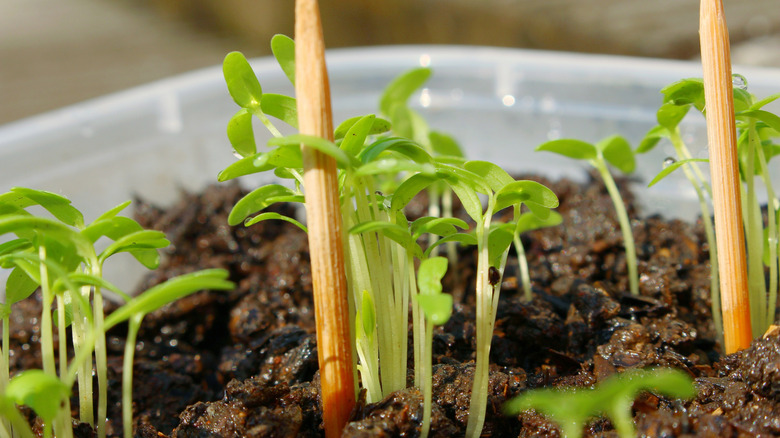
Gardeners often turn wooden toothpicks into plant markers or toss them into the compost bin to add a bit more carbon. It's worthwhile to save a few of these pointy little sticks for pest prevention, too. Toothpicks are thought to repel a type of worm you never want to see in your garden. This is the cutworm, which is the caterpillar of several common moth species. Cutworms can decimate gardens by wrapping their bodies around plant stems as they feed on them. This chokes many plants, especially young and tender ones. Placing a toothpick against a seedling's stem may keep cutworms away from it. The idea is that the toothpick prevents these pests from encircling the stem. For extra protection, try surrounding the entire stem with toothpicks.
Knowing if your yard has a pest problem is useful for deciding whether to try this toothpick hack. Keep an eye out for caterpillars that curl into a c shape when you pull them off of plants or dig them out of the soil, where some types of cutworms nibble on plants' roots. Though cutworms come in a few different colors, they're often a dull shade of gray or brown. A number have dots or stripes. These garden invaders like to snack on vegetables such as peppers, peas, and cabbages, but they'll eat other plants as well.
Researchers haven't spent much time studying the pest-repelling properties of toothpicks, but these miniature strips of wood are unlikely to harm your garden. Plus, they're cheap and easy to use. Untreated wooden toothpicks are ideal because they're biodegradable and don't contain chemicals that could harm you or your yard's wildlife.
Other ways toothpicks can deter pests and diseases
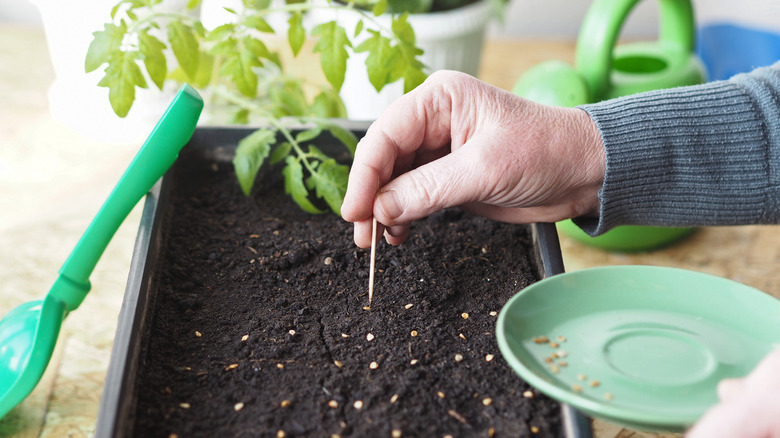
Wooden toothpicks are handy for monitoring your soil's moisture level. This can help prevent overwatering, which is better than learning about this avoidable gardening mistake the hard way. Overwatering makes fungal infections more likely and attracts pests such as mosquitoes, ants, and cockroaches. Wet soil can even encourage rodents to burrow their way into your garden. To see if your garden is damp enough, push a toothpick into the soil for at least 30 seconds and then inspect what sticks to it. If the toothpick is moist and a few specks of soil have attached to it, your garden probably doesn't need watering that day. If it's dry and free of soil, you should replenish the moisture supply. If it's dark and wet, your garden needs to dry out.
Don't have any toothpicks handy for cutworm prevention and moisture testing? That's okay. See if you have a good alternative in your kitchen. Wooden chopsticks will work, as will skewers such as those in the Makerstep 100-pack of 6-inch natural bamboo skewers. You could even try deterring cutworms with a small stick from your yard or a reusable metal straw. Just push these items into the soil directly next to a plant stalk, as you would with a toothpick.